Vacuum Lifter Supplier Comparison: Features, Pricing, and Selection Guide for Glass, Sheet Metal, Roof Panels, Sandwich Plates, and MDF
Material handling is one of the most injury-prone and cost-intensive operations in manufacturing, construction, and warehousing. According to the U.S. Bureau of Labor Statistics, overexertion and repetitive motion account for nearly one-third of all workplace injuries requiring days away from work. Vacuum lifting technology has emerged as a proven solution to reduce manual strain, prevent product damage, and accelerate production cycles across multiple industries. Yet with dozens of suppliers offering vacuum lifters for glass, sheet metal, roof panels, sandwich plates, and MDF, choosing the right system can feel overwhelming.
A single wrong purchase decision can lead to production bottlenecks, safety incidents, and thousands of dollars in avoidable costs. On the other hand, the right supplier partnership delivers measurable returns: reduced worker injuries, faster cycle times, and improved asset utilization across your entire operation.
Key takeaway: The most expensive supplier is rarely the best choice, but the cheapest almost never is. Smart buyers evaluate total cost of ownership, application fit, and after-sales support—not just upfront price tags.
Whether you are sourcing your first vacuum lifting system or replacing an underperforming unit, this guide gives you the decision framework used by procurement professionals across industries. This comprehensive guide compares vacuum lifter suppliers across five critical application categories: glass vacuum lifter systems, sheet metal vacuum lifter supplier offerings, Roof Panels vacuum lifter equipment, sandwich Plate lifting solutions, and MDF vacuum lifter technologies. You will learn how to evaluate features, understand pricing structures, compare supplier types, and avoid common procurement mistakes.
Download our free vacuum lifter technical scheme
Understanding Vacuum Lifting Technology: A Quick Primer
Before comparing suppliers, you need a clear understanding of how vacuum lifting systems work and why application-specific designs matter.
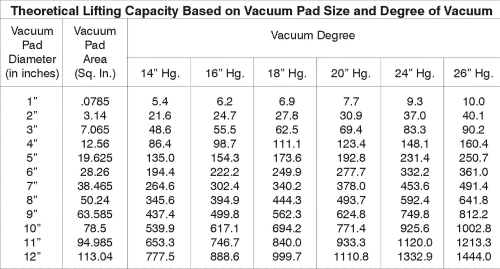
A vacuum lifter uses negative air pressure to create a secure grip between a suction pad and the load surface. A vacuum pump—either electric or pneumatic—evacuates air from the pad cavity, generating lifting force equal to the pad area multiplied by the pressure differential. A single square meter of vacuum at 60% vacuum efficiency can theoretically lift up to 6,000 kg, though real-world ratings are considerably lower due to safety factors and load surface conditions.If you want to have the tilting function, this safety factor will be halved by 2:1, and if you want to have the rotating function, the safety factor will be reduced to 4:1.
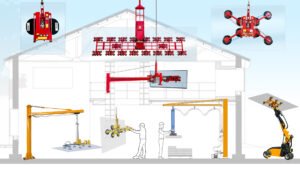
The technology branches into three primary system architectures:
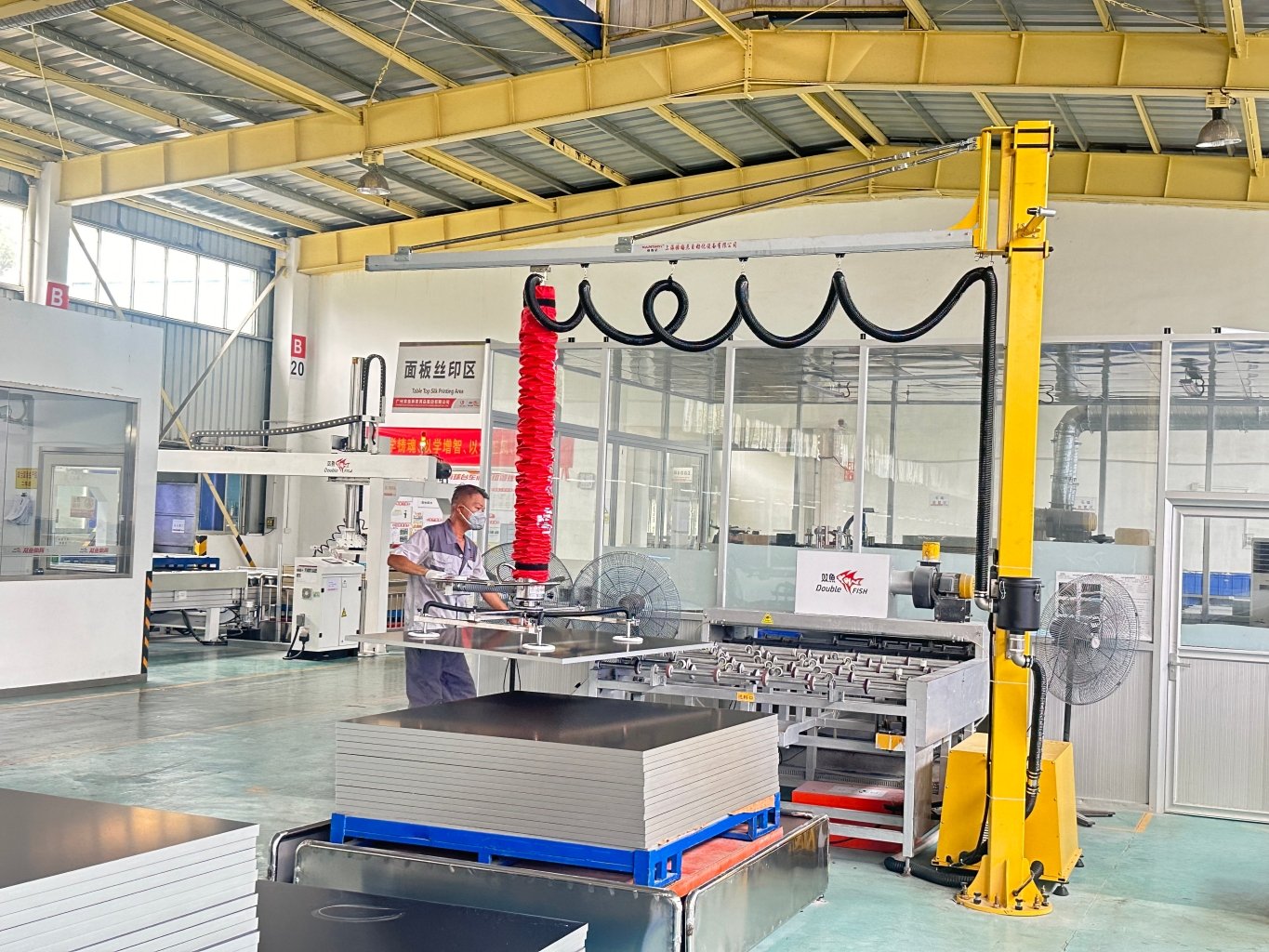
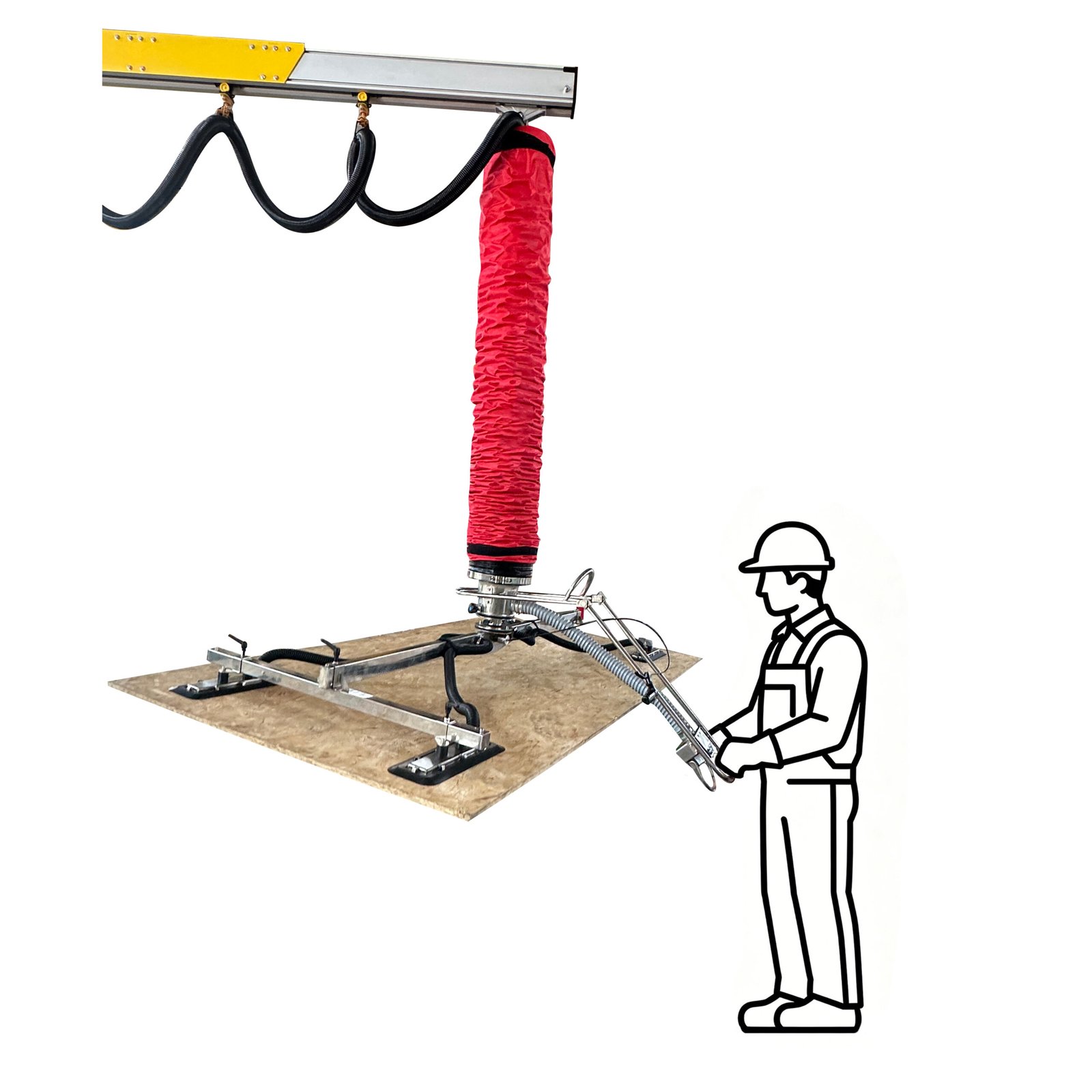
1. Vacuum Tube Lifters use a sealed tube with an internal piston. They are ideal for repetitive lifting of non-porous, relatively flat loads up to 270 kg. These systems offer precise load control and are popular in food processing, packaging, and light manufacturing.
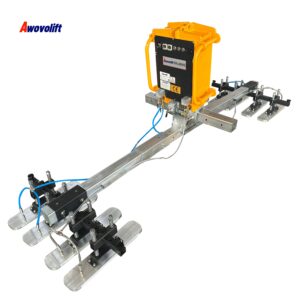
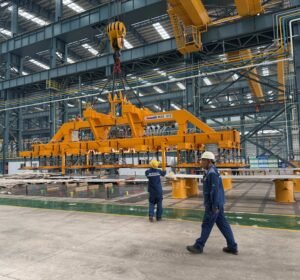
2. Vacuum Pad Lifters attach directly to loads using multiple suction pads mounted on a frame. They connect to a crane, hoist, or forklift. Pad lifters handle heavier loads—up to 30,000 kg or more—and accommodate irregular surfaces, porous materials, and large sheets.
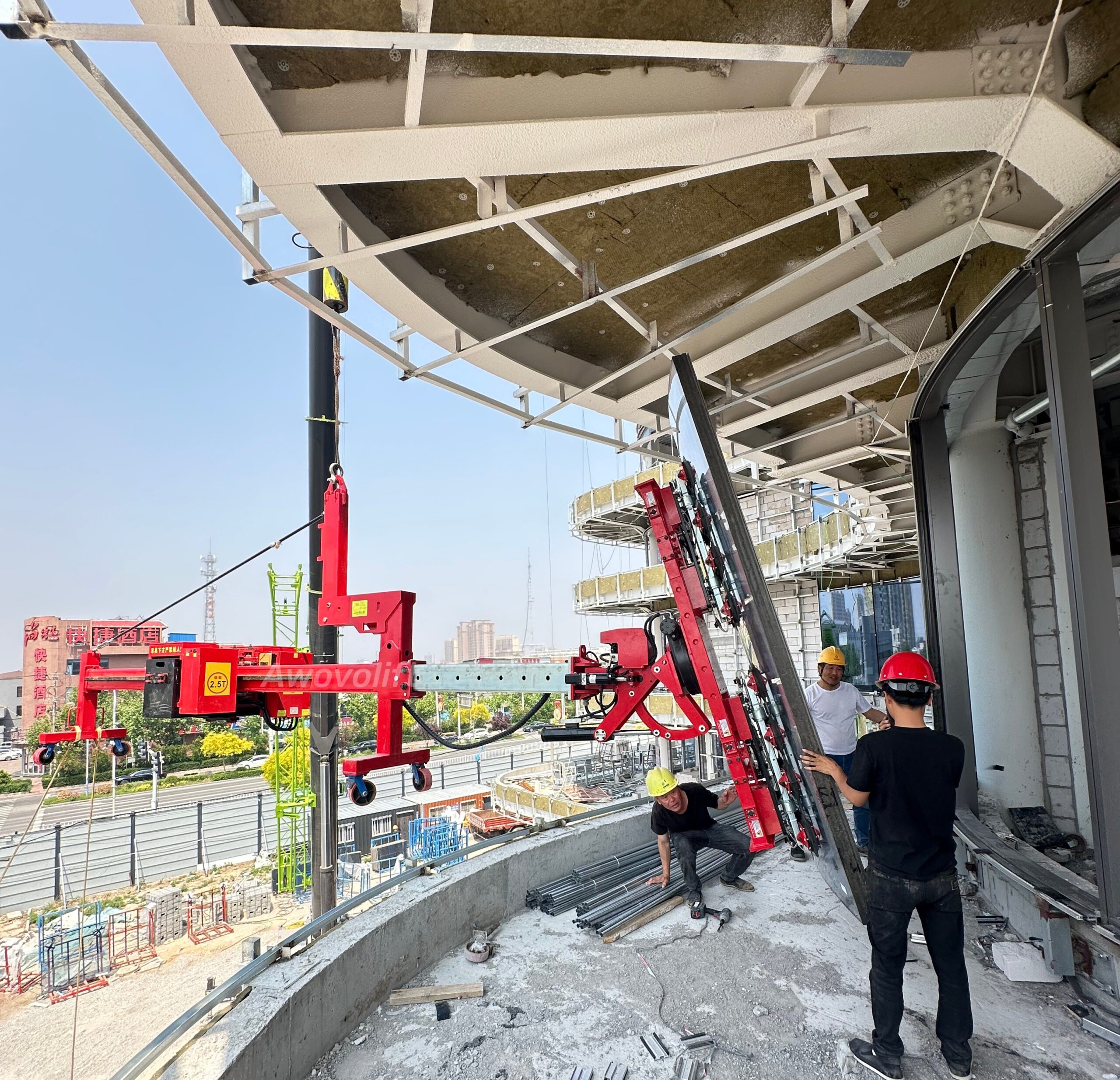
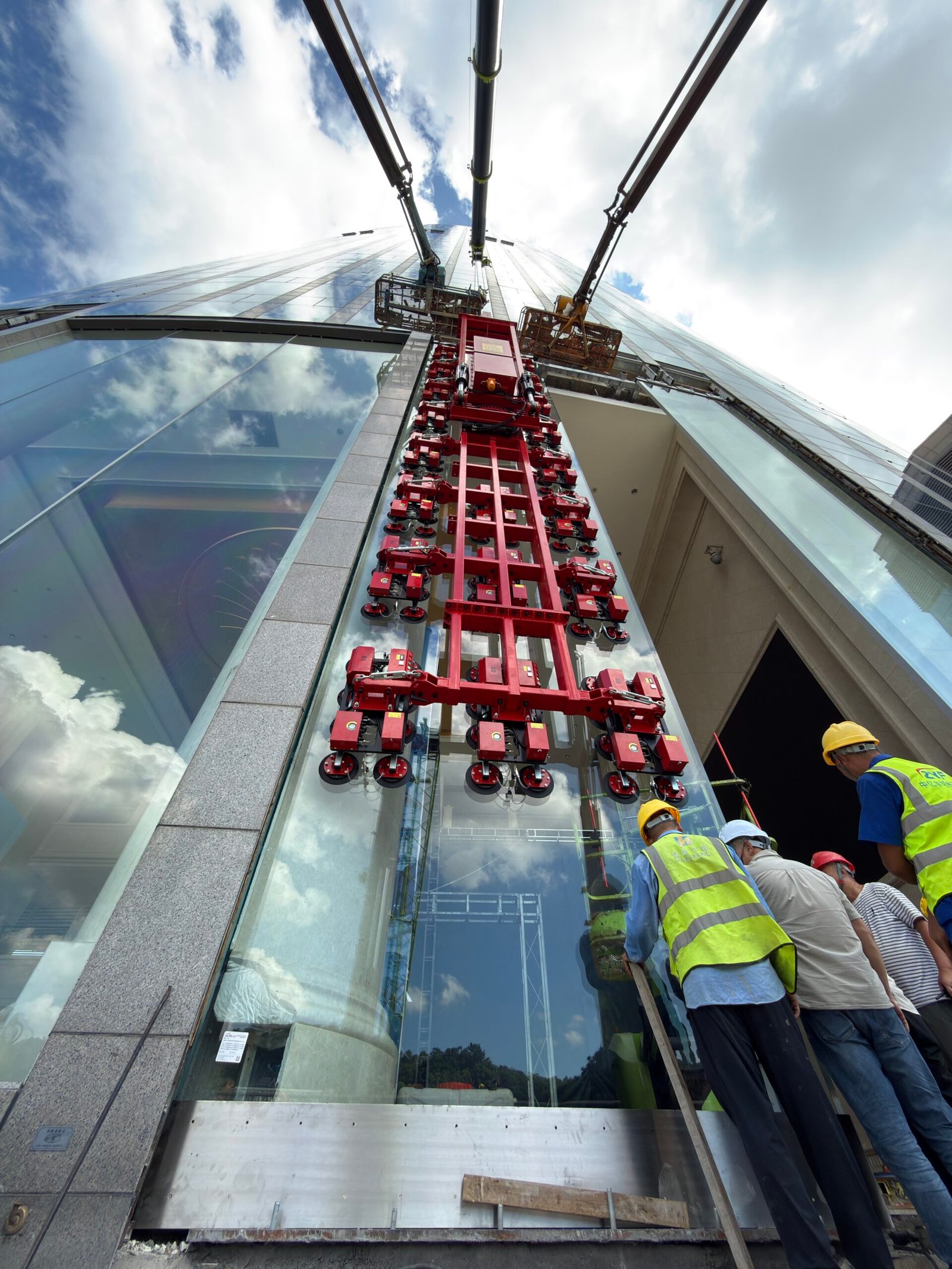
3. Self-Contained Battery Lifters integrate the vacuum pump, battery, controls, and pads into a single unit. They are popular for construction sites without reliable power access and for operations requiring mobility across multiple locations.Up to 21 tons, suitable for metal plate industry.
Source: www.awovolift.com
A vacuum lifter is only as reliable as its vacuum monitoring system and the supplier’s engineering support behind it. The following six categories form the backbone of any supplier comparison.
Essential Features to Compare Across Vacuum Lifter Suppliers
Lifting Capacity and Load Geometry
Lifting capacity is always expressed at a defined vacuum level—typically -0.6 bar or -0.8 bar. Beware of suppliers who quote theoretical maximums without clarifying the operating vacuum. The actual safe working load (SWL) must account for the material’s surface condition, porosity, flexibility, and orientation during rotation or tilt.
Load geometry matters just as much as weight. A 500 kg glass pane requires different pad placement than a 500 kg steel plate because the glass has lower bending stiffness. A robust supplier will calculate the required number of suction pads, their diameter, and their arrangement based on the material’s Young’s modulus and the maximum deflection allowed.
If you need to handling and lifting materials right now, please consult the customer service team of Awovolift, and we will definitely give you a complete solution of vacuum lifter within 24 hours.
Source: www.awovolift.com
Vacuum Generation Technology
Three main vacuum generation methods are used in industrial lifters:
- Electric rotary vane pumps: Provide continuous high vacuum, ideal for porous materials like MDF. They are self-contained and quiet but require electrical power and regular oil changes.
- Side channel blowers / regenerative pumps: Deliver high airflow at lower vacuum levels, excellent for rough or porous surfaces where leakage is inevitable.
- Compressed air Venturi ejectors: Have no moving parts, require no electricity at the lifting point, and are explosion-proof. However, they need a large compressed air supply and are less energy-efficient.
For continuous production with porous sheets, a high-flow side channel blower is often the best choice. For intermittent glass handling, a battery-powered electric pump offers mobility and quiet operation.
Safety Systems and Redundancy
Safety is non-negotiable. Compare suppliers on these specific redundancy features:
- Dual independent vacuum circuits: If one circuit fails, the other holds the load.
- Check valves or non-return valves: Prevent instant vacuum loss if a hose or pad is damaged.
- Low vacuum alarm: Audible and visual warning when vacuum drops below safe threshold.
- Reserve vacuum tank: Provides a buffer of 20–30 seconds for controlled lowering during power failure.
- Battery backup: Maintains vacuum and alarm functions during electrical outage.
CE marking, ASME compliance, and independent load testing should be standard.
Controls and Ergonomics
The control handle directly affects operator fatigue and precision. Compare available motions:
- 90° tilt for unloading from pallets to vertical orientation
- 180° rotation for glass installation
- 360° continuous rotation for assembly line positioning
- Electric or manual tilt, telescopic extension, and ergonomic grip design
- Wireless remote control for large roof panel systems
Material Compatibility and Pad Options
Suction pads are the critical interface between lifter and load. The pad material must match your surface without leaving marks or degrading:
- Nitrile rubber: General purpose, oil-resistant, good for sheet metal
- Silicone: Non-marking, high temperature resistance, ideal for glass
- Polyurethane: Abrasion-resistant, suited for rough MDF or concrete
- Closed-cell foam: Seals uneven or textured surfaces, used for sandwich plates and insulated panels
Below is a quick comparison of the core features and why they matter.
| Feature | What to Compare | Why It Matters |
|---|---|---|
| Rated capacity | SWL at defined vacuum level | Prevents overload and dropping |
| Vacuum pump type | Electric, blower, or Venturi | Matches porosity and energy cost |
| Safety redundancy | Dual circuits, check valves, reserve tank | Protects workers in failure mode |
| Pad material | Rubber, silicone, PU, foam | Prevents marking and ensures grip |
| Rotation / tilt | 90°, 180°, 360°, remote | Improves ergonomics and cycle time |
| Certifications | ASME B30.20, CE, EN 13155 | Meets legal and insurance requirements |
Key Types of Vacuum Lifters and Their Applications
Source: www.awovolift.com
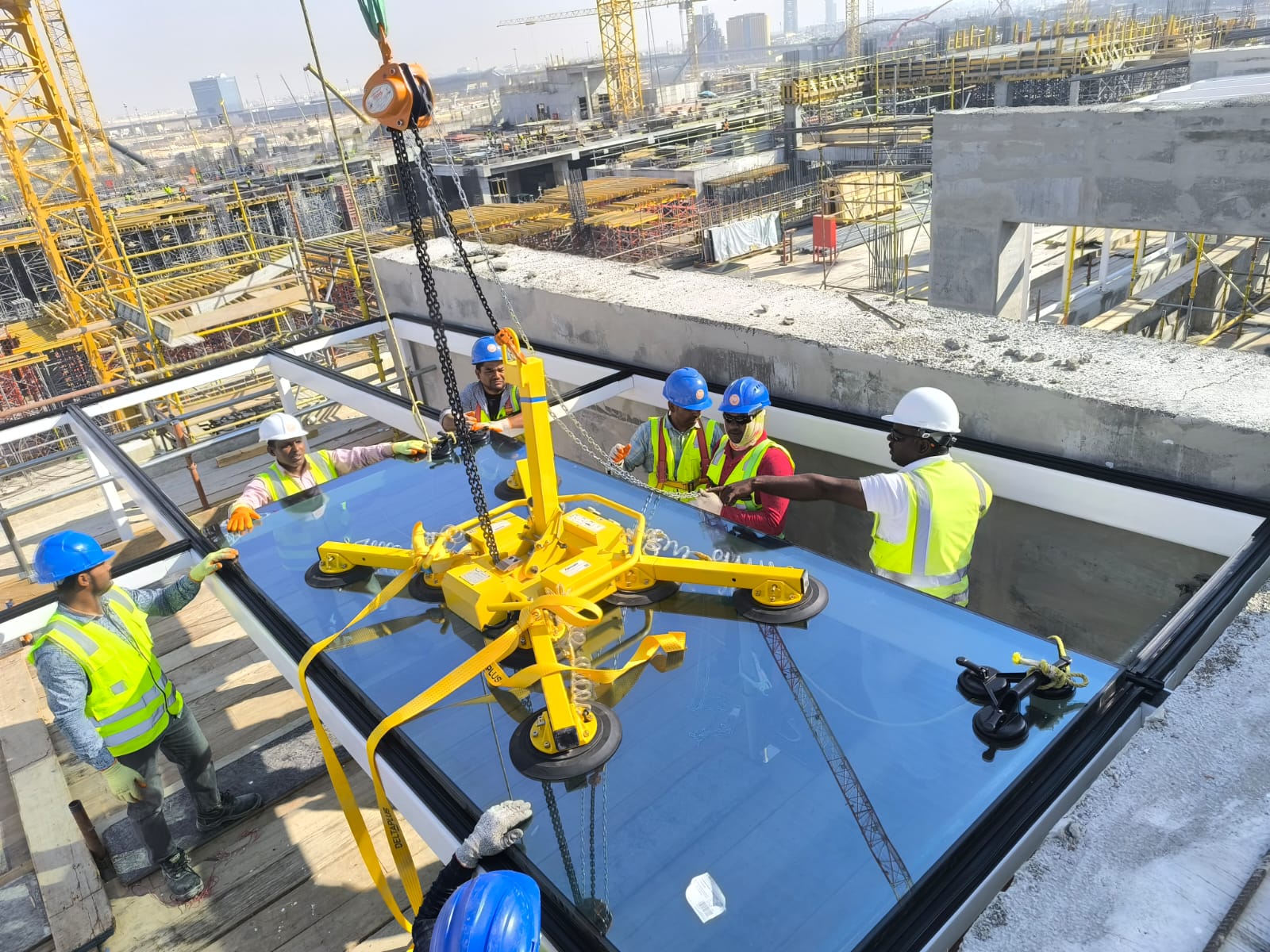
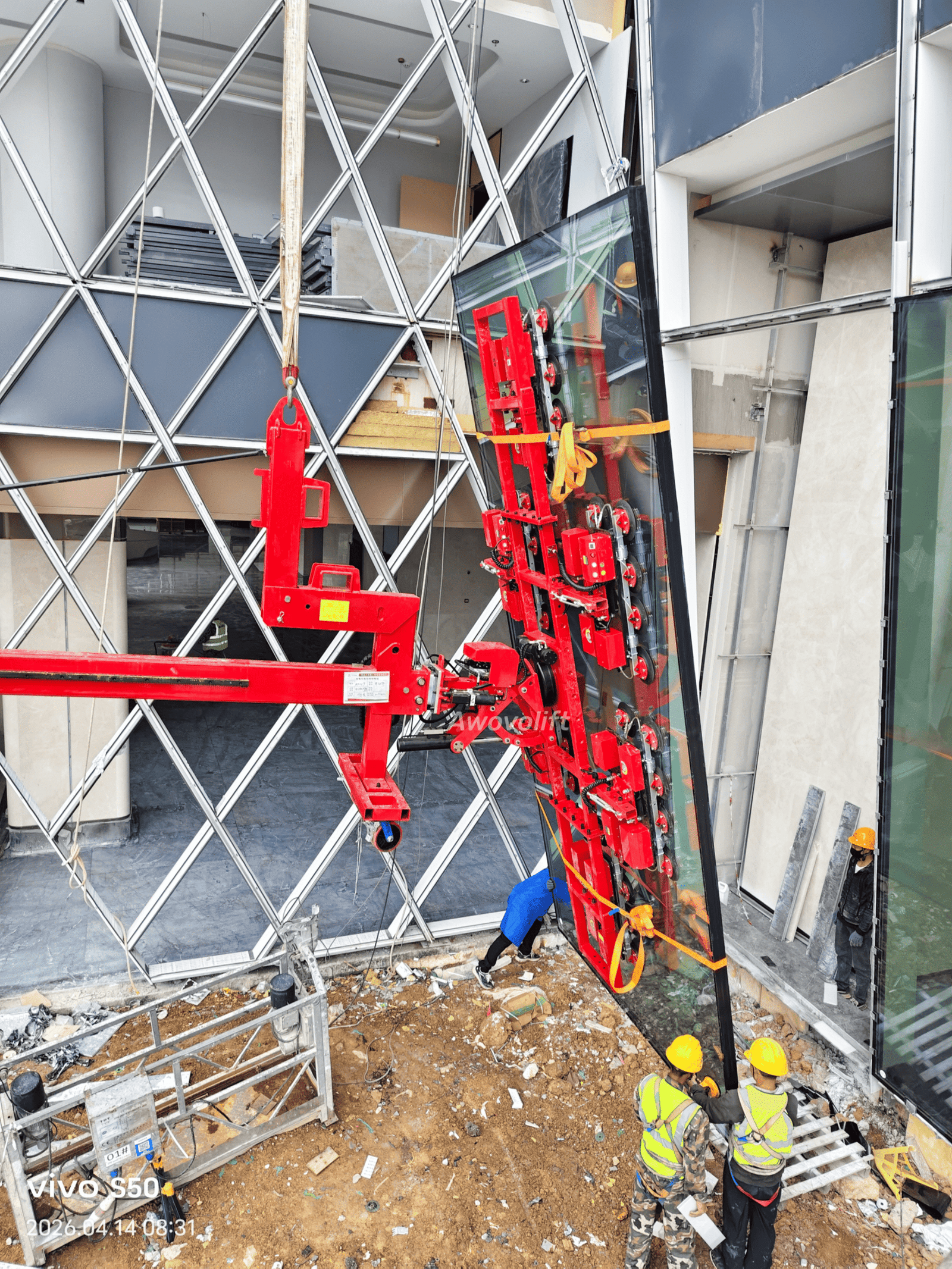
A glass vacuum lifter is engineered for handling glass panels, windows, mirrors, and glazing units. These lifters typically feature multiple suction cups mounted on an articulated arm or frame. Key specifications include load capacity (commonly 300 kg to 2,000 kg), 90° or 360° powered rotation, and dual-circuit vacuum systems that maintain grip even if one circuit loses power. Battery-powered models with integrated vacuum pumps are popular for construction sites, while electric or pneumatic models suit indoor manufacturing environments.Of course, according to the different thickness of glass, whether it is used indoors or outdoors, it is also necessary to consider the size and number of suction cups, which is also a very key factor for professional suppliers to consider.
When comparing suppliers, look for features such as automatic vacuum monitoring, audio-visual alarms, and spring-loaded pad arrangements that conform to curved or uneven glass. High-end glass vacuum lifters may include proportional controls for smooth acceleration and deceleration, reducing the risk of stress fractures during rotation. The load of glass vacuum lifter equipment in the market is usually 500-2000kg, and the glass with a length of 6-8 meters is lifted. In addition, there will also be glass lifting equipment suitable for 12-18 meters long and 10000-15000kg load. Prices typically start around $2,500 for manual 360° lifters with 500 kg capacity and exceed $20,000 for fully powered, high-capacity models with counterbalance weight vacuum lifter and remote control.
.jpg)
Source: www.Awovolift.com
Sheet Metal Vacuum Lifters
Selecting the right sheet metal vacuum lifter supplier is crucial for fabrication shops, automotive plants, and laser cutting metal service centers. Sheet metal lifters must handle thin, flexible, and often oily or slightly textured surfaces. The best systems use multiple high-flow vacuum pump AC power arranged in a grid or configurable pattern to support the entire sheet and prevent sagging. Horizontal-to-vertical flipping (90° tilting) is a common requirement for press brake loading and welding stations.
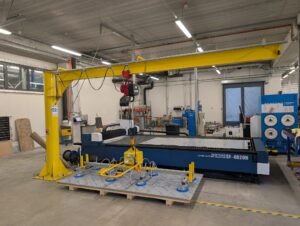
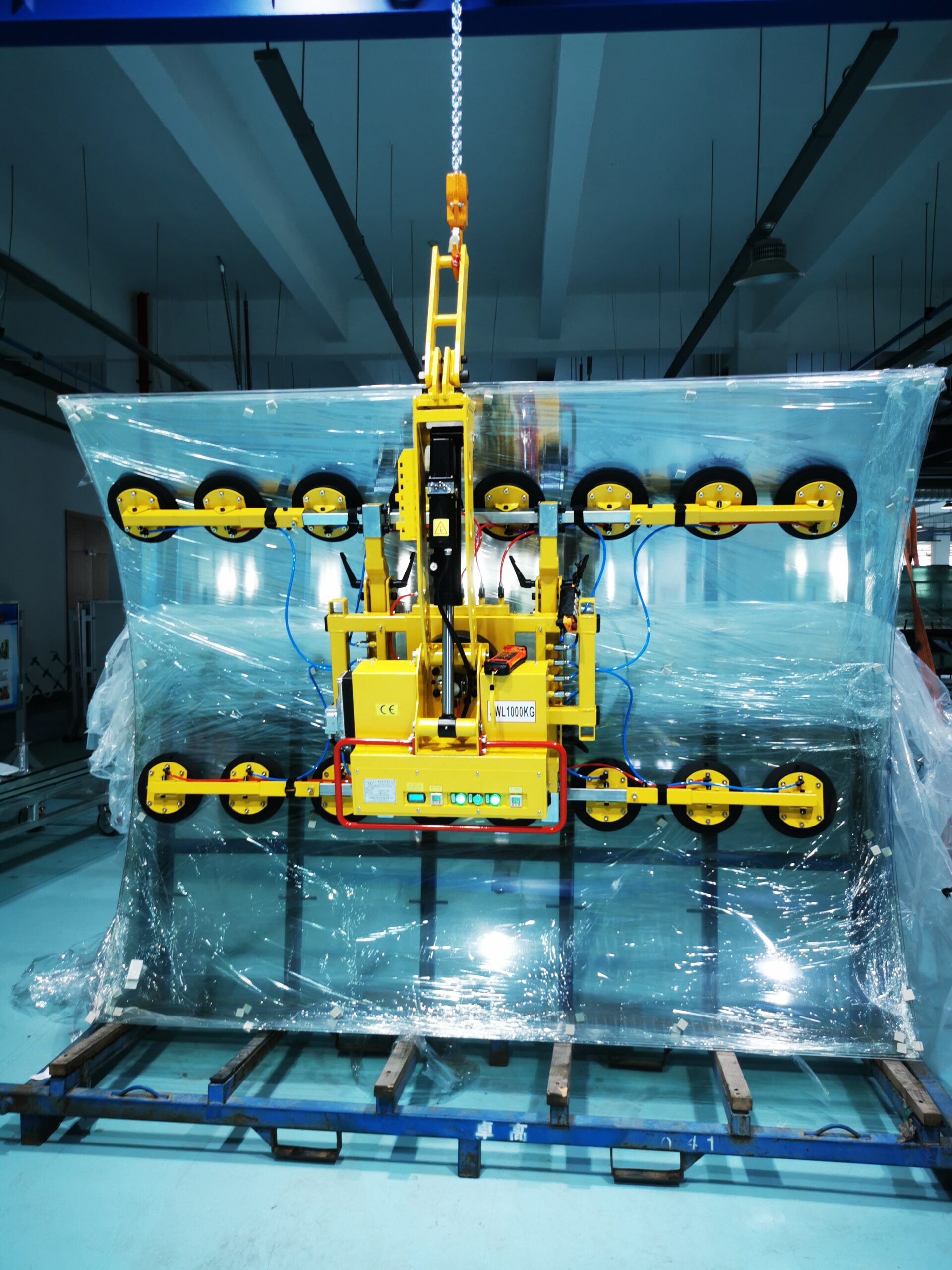
Load capacities for sheet metal vacuum lifters range from 100 kg for small sheets to over 5,000 kg for heavy plate. It is mainly suitable for the scene of loading and unloading of laser cutting machine.Suppliers differentiate themselves through pad layout customization, quick-change pad technology, and integrated load leveling. Air consumption and vacuum pump efficiency are also important for continuous-duty operations. Entry-level pneumatic sheet metal lifters start around $2,500, while heavy-duty electric models with powered rotation and multiple pad zones can cost $5,000 to $8,000. According to the size of the plate, the supplier can accurately recommend the appropriate number of suction cups and equipment size under the consideration of drape, which is a very key consideration in selecting suppliers.
Roof Panels Vacuum Lifters
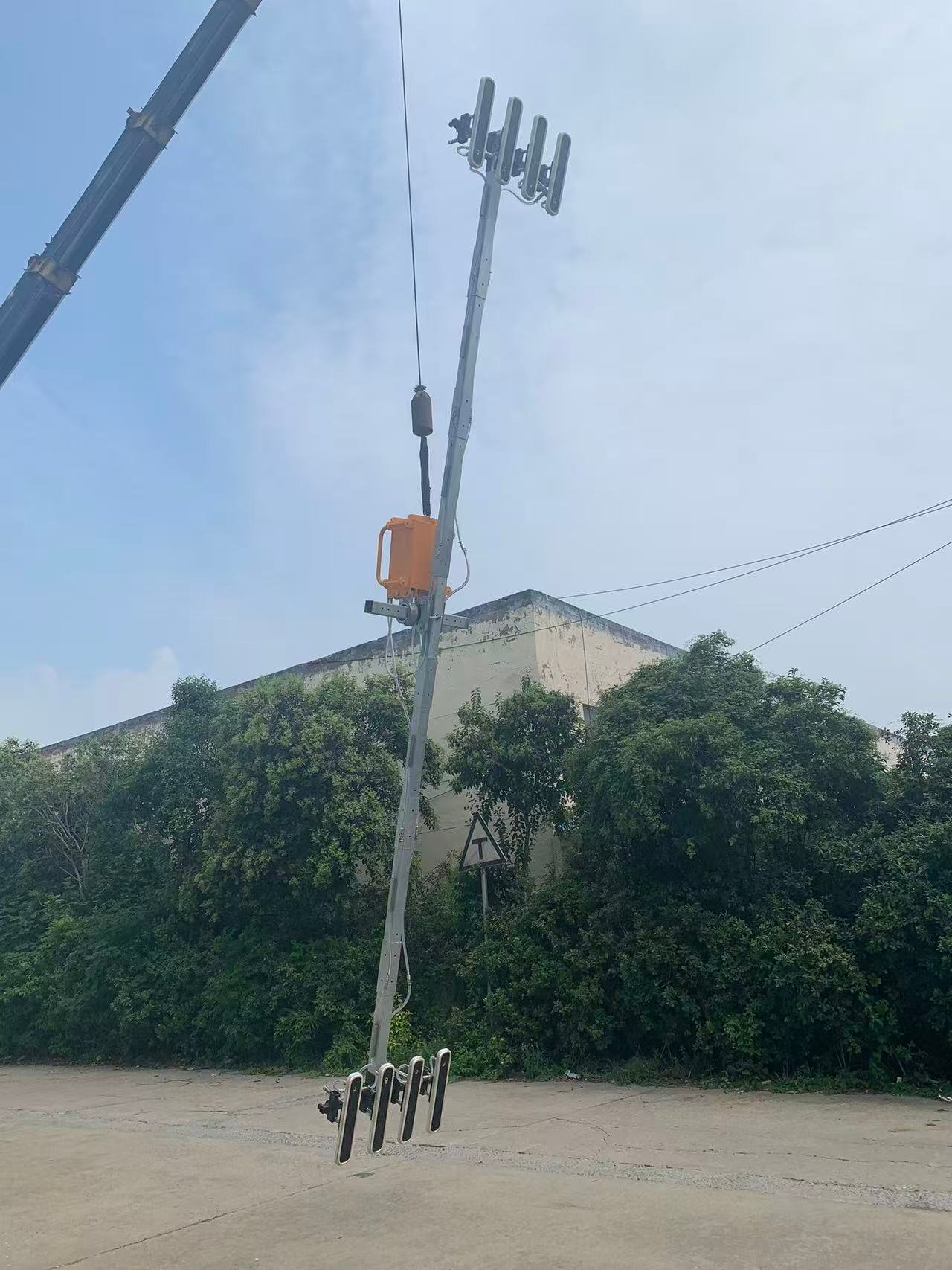
A roof panels vacuum lifter is specifically designed for handling metal roof sheets, standing seam panels, insulated roof panels, and corrugated profiles. These lifters must accommodate large surface areas, uneven ribbed profiles, and outdoor conditions including wind and dust. Most roof panel lifters are crane-suspended and feature a wide frame with multiple suction pads that can be adjusted laterally to match panel width.
Key features to compare include wind resistance rating, remote-control operation for precise placement on sloped roofs, and high-visibility paint or lighting for safety. Some suppliers offer roof panel lifters with integrated tilt mechanisms that allow the panel to be angled up to 90° for installation on vertical walls. Load capacities typically range from 500 kg to 1,500 kg, with prices from $4,000 for basic models to $9,000 for heavy-duty, fully powered units with automated pad positioning.
Sandwich Plate Lifting Systems
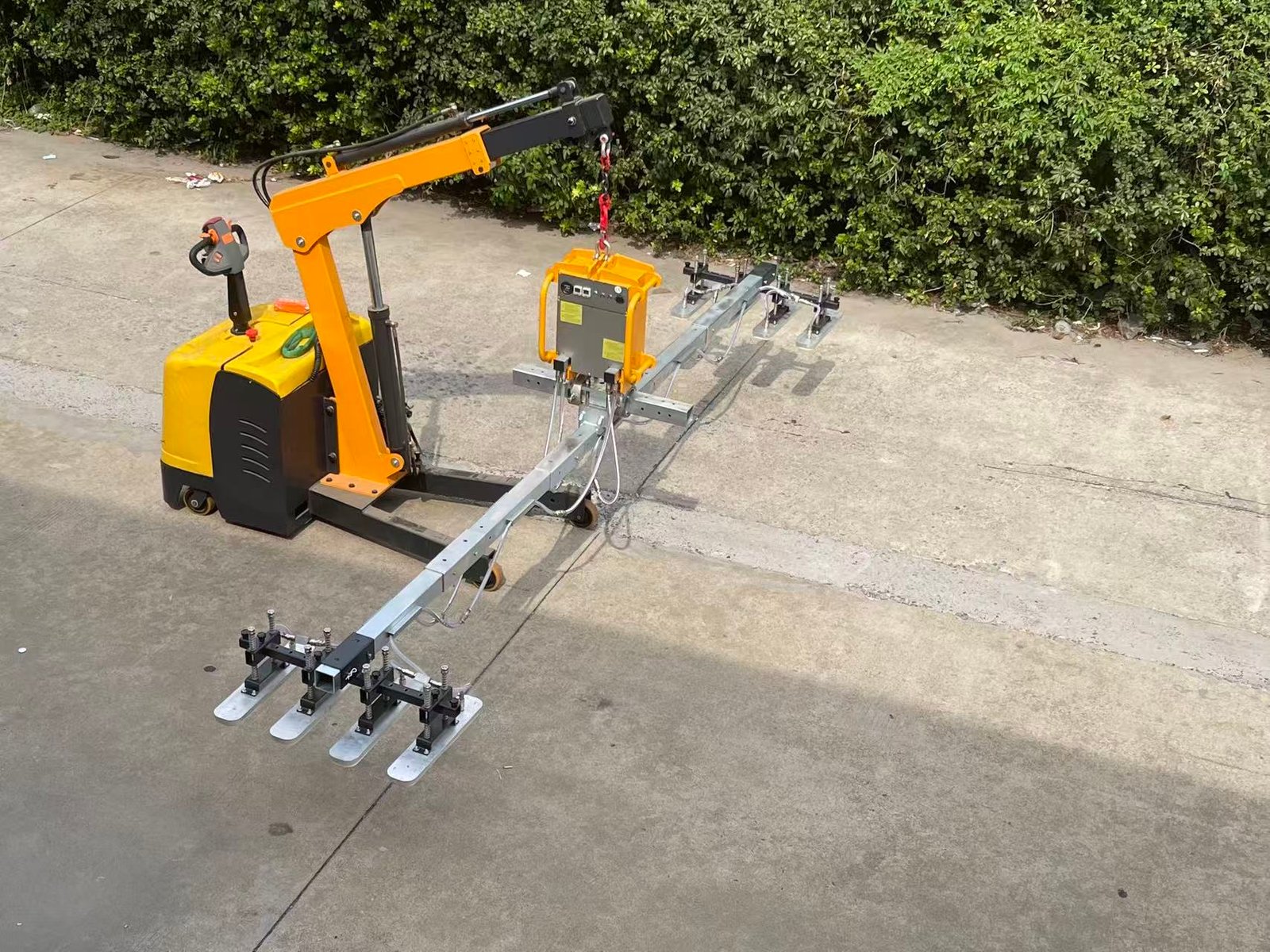
Sandwich plate lifting refers to the handling of composite panels made from two outer skins (often steel, aluminum, or fiberglass) bonded to a lightweight core (EPS foam, polyurethane, mineral wool, or honeycomb). These panels are used in cold storage, clean rooms, modular buildings, and industrial cladding. The challenge is that sandwich plates are often large, flexible, and sensitive to crushing or delamination at the edges.
Vacuum lifters for sandwich plates use large-diameter suction cups with soft, non-marking seals to distribute load evenly across the panel surface. Adjustable beam lengths and multiple pad positions allow the lifter to match panel dimensions from 2 meters to over 12 meters. Some advanced systems include pressure sensors on each pad to detect a loss of vacuum and automatically shut down the lift before the panel could slip. Prices for sandwich plate vacuum lifters start around $4,000 for simple beam systems and can exceed $10,000 for fully automated, multi-zone lifters with electronic load monitoring and anti-drop protection.
MDF Vacuum Lifters
An MDF vacuum lifter must address a unique challenge: medium-density fiberboard is a semi-porous material. Standard vacuum cups designed for glass or metal will leak air through the surface and lose grip quickly. Therefore, MDF lifters require high-flow vacuum pumps or blowers that can maintain suction despite continuous air leakage, along with specialized foam or rubber seals that conform to the board’s surface texture.
MDF vacuum lifters are widely used in cabinet making, furniture production, and panel processing. Typical load capacities range from 100 kg to 200 kg for single boards, with some systems capable of lifting entire stacks. Features to compare include pump type (oil-lubricated rotary vane vs. dry-running claw pump), filter efficiency to prevent MDF dust from damaging the pump, and pad replacement cost. Prices for MDF vacuum lifters generally fall between $6,000 and $10,000 depending on capacity, pump technology, and rotation options. Always verify the supplier’s experience with porous materials, as not all vacuum lifter manufacturers understand the fluid dynamics of air leakage through MDF.
Supplier Comparison Criteria: What to Evaluate Before Buying
Comparing vacuum lifter suppliers goes far beyond the sticker price. A low-cost lifter that requires frequent pad replacement, has limited spare parts availability, or lacks certified safety features will cost far more over its service life than a slightly more expensive industrial-grade vacuum lifter unit. The following criteria should form the backbone of your supplier evaluation.
Although some suppliers offer very low prices, the maintenance cost and security risks in the later period of use will cause losses that will far exceed several times the purchase cost.
1. Load Capacity and Material Compatibility
Clearly define the maximum weight, dimensions, surface finish, and porosity of the materials you handle. Ask suppliers to provide a technical calculation showing the required vacuum level (usually expressed in -kPa or mbar) and safety factor (minimum 2:1 for vertical lifting, 4:1 for horizontal or rotation lifting). Avoid suppliers who only quote a single capacity without asking about your application.
2. Power Source and Duty Cycle
Vacuum lifters can be powered by electric motors, compressed air and batteries. Electric models offer consistent performance and are suited for continuous production lines. Battery-powered units provide mobility on construction sites but require charging infrastructure. Pneumatic lifters are lightweight and explosion-proof but depend on a reliable compressed air supply. Match the power source to your operational environment and daily usage hours.
3. Safety Certifications and Redundancy
Reputable suppliers should provide CE marking (for Europe), ASME B30.20 compliance (for the U.S.), or equivalent local certifications. Look for dual-circuit vacuum systems, non-return valves on each suction pad, audible and visual alarms, and automatic shut-off when vacuum drops below the safe threshold. The supplier should also provide a risk assessment and user manual in your local language.
4. Suction Cup Technology and Spare Parts
The suction cup is the most frequently replaced component. Compare cup materials (nitrile, silicone, polyurethane, natural rubber), temperature resistance, oil resistance, and wear life. Ask about spare parts pricing and lead times. Some suppliers offer quick-change cups that can be replaced without tools, reducing downtime.
5. Customization and Modular Design
No two material handling applications are identical. The best vacuum lifter suppliers offer modular frames, adjustable pad positions, and control options that can be tailored to your specific material dimensions. Avoid “one-size-fits-all” suppliers if you handle multiple panel sizes or unusual shapes.
6. Warranty, Training, and After-Sales Support
A standard warranty of 2-year is common for vacuum lifters. However, the quality of after-sales support matters more than the warranty length. Ask about technical phone support, on-site commissioning, operator training, and preventive maintenance programs. Check customer reviews and request references from companies in your industry.
Feature Comparison Across Vacuum Lifter Supplier Categories
To simplify your supplier comparison, vacuum lifters can be grouped into three broad tiers: entry-level manual systems, mid-range powered systems, and heavy-duty or fully custom solutions. The table below summarizes typical features and pricing.
| Feature | Entry-Level Manual | Mid-Range Powered | Heavy-Duty / Custom || Load Capacity | 250–1000 kg | 1000–2,500 kg | 2,500–8,000+ kg |
| Power Source | Manual pump / shop air | Electric / battery / pneumatic | Electric / hydraulic / integrated crane |
| Rotation | Manual 90° or 360° | Powered 90° or 360° | Multi-axis powered with remote control |
| Safety Redundancy | Single vacuum circuit | Dual circuit with alarms | Multi-circuit, per-pad sensors, anti-drop |
| Customization | Limited fixed pad layout | Adjustable frame / pad positions | Fully engineered to application |
Pricing Breakdown: What Influences Vacuum Lifter Costs
Understanding the components that drive vacuum lifter pricing helps you negotiate better and avoid overpaying for unnecessary features. The primary cost drivers are:
- Load capacity and frame size: Larger frames require more structural steel, larger suction cups, and more powerful vacuum pumps.
- Material type: Porous materials like MDF require high-flow pumps and specialized seals, which add cost. Non-porous glass or metal can use simpler pumps.
- Power source: Battery-powered lifters cost more upfront than pneumatic models but may save on energy and infrastructure.
- Rotation and tilt mechanisms: Powered rotation, especially 360° continuous rotation, adds mechanical complexity and control electronics.
- Safety and monitoring systems: Dual vacuum circuits, individual pad sensors, and automatic shut-off increase both component cost and engineering time.
- Certifications and compliance: CE, ASME, or ISO certification processes involve testing and documentation that add overhead.
- Brand reputation and support network: Established manufacturers with global service networks often charge a premium but deliver faster response times and longer-lasting equipment.
- Custom engineering: Any deviation from a standard catalog model—such as special pad layouts, extended beams, or integration with existing cranes—will increase cost and lead time.
-scaled.jpg)
The table below provides typical price ranges by application type.
| Vacuum Lifter Type | Typical Load Capacity | Price Range (USD) | Key Feature Drivers |
| Glass vacuum lifter | 300–2,000 kg | $2,000–$5,000 | 360° rotation, dual circuit, battery option |
| Sheet metal vacuum lifter | 500–3,000 kg | $2,000–$7,000 | Multiple pad zones, 180° flip, quick-change |
| Roof panels vacuum lifter | 500–1,500 kg | $4,000–$8,000 | Large area pads, remote operation, wind rating |
| Sandwich plate lifting system | 500–2,000 kg | $4,000–$8,000 | Adjustable beam, non-marking cups, anti-drop |
| MDF vacuum lifter | 100–200 kg | $7,000–$9,000 | High-flow pump, porous seals, dust filtration |
When evaluating quotes, calculate the total cost of ownership over a 5-year period, including energy consumption, spare parts, maintenance labor, and downtime. A lifter that costs $1,000 more upfront but uses 30% less energy and has lower spare parts costs may deliver a lower total cost by year three.
Download our free vacuum lifter technical scheme
How to Choose the Right Vacuum Lifter Supplier for Your Application
Follow this step-by-step process to systematically evaluate suppliers and avoid the costly mistake of high maintenance cost after use due to low-cost procurement.
Step 1: Define Your Material Handling Requirements
Document the maximum weight, length, width, thickness, surface condition, porosity, and temperature of every material you plan to lift. Include any special requirements such as rotation angle, placement precision, or cleanroom compatibility.
Step 2: Assess Your Operational Environment
Will the lifter be used indoors or outdoors? Is there a compressed air supply or electrical outlet? What is the ambient temperature range? Is the environment dusty, oily, or explosive? These factors can determine the final scheme.
If you need to handling and lifting materials right now, please consult the customer service team of Awovolift, and we will definitely give you a complete solution of vacuum lifter within 24 hours.