Maximize Metal Sheet Laser Cutting Efficiency with Vacuum Lifters at Every Station
Imagine a fabrication floor where every sheet of metal moves effortlessly, safely, and without a single scratch. In modern metal sheet fab workplace, efficiency isn’t just about faster cutting or bending—it’s about the seamless flow of raw materials from storage to finished product. Yet for many shops, the handling of carbon steel, aluminum plate, and stainless steel sheets remains a bottleneck of manual labor, safety risks, and costly surface damage. The solution? Deploying a sheet metal vacuum lifter at every key station. This comprehensive guide explores how vacuum lifting technology can transform your operations, material by material, station by station.
Manual handling of large, heavy, or delicate metal sheets leads to worker injuries, material waste, and production delays. According to the U.S. Bureau of Labor Statistics, musculoskeletal disorders account for 30% of all workplace injuries in manufacturing, with manual lifting being a primary cause. At the same time, even minor scratches on a stainless steel sheet or dents in an aluminum plate can render a high-value part unusable. By integrating purpose-built vacuum lifters designed for carbon steel, aluminum plate lifting, and stainless steel sheet vacuum lifter applications, shops can eliminate these problems while accelerating throughput. In the following sections, we’ll break down how to achieve station-level efficiency, the technical nuances for each material, and how to select the right system—plus a free resource to guide your implementation.
.png)
The Hidden Costs of Manual Material Handling in your workplace
Before diving into vacuum lifter benefits, it’s essential to quantify what manual handling actually costs your shop. Beyond the obvious risk of back strain and dropped loads, there are cascading inefficiencies that erode margins.
- Slow cycle times: A two-person team might take 3–5 minutes to position a single large sheet onto a laser cutting bed. Multiply that across hundreds of sheets per day, and the time sink is enormous.
- Surface damage and rework: Steel slings, hooks, and magnetic lifters can scratch, dent, or abrade sensitive surfaces—especially on aluminum and stainless steel. Rework or scrapping of cosmetic parts adds direct cost.
- Worker fatigue and safety incidents: Repetitive lifting of 4’×8′ or 5’×10′ sheets stresses the body, leading to high turnover and workers’ compensation claims. A single back injury can cost over $40,000 in direct costs alone.
- Inconsistent positioning: Manual placement often requires trial-and-error adjustments, reducing machine utilization rates on expensive CNC equipment.
Each of these inefficiencies compounds. A shop moving 200 sheets a day can lose several hours of productive time, waste thousands of dollars in material, and face preventable safety liabilities. A sheet metal vacuum lifter addresses all these issues at their root—by enabling one operator to handle sheets of any size with precision and zero surface contact damage.
Why Vacuum Lifters Outperform Traditional Lifting Methods
Let’s compare the most common lifting tools used in fab workplace with vacuum technology:
| Lifting Method | Pros | Cons for Sheet Metal |
|---|---|---|
| Chains & Hooks | Low cost, simple | Requires edge grip; scratches surface; dangerous if load shifts; no control over thin sheets. |
| Magnetic Lifters | Quick attachment on ferrous metals | Only for magnetic materials (carbon steel); can mar surface; leaves residual magnetism; cannot handle stainless or aluminum. |
| Clamps & Plate Dogs | Secure grip on thick plate | Mar surface; slow to attach/detach; limited to rigid, thick materials; risk of bending thin edges. |
| Vacuum Lifters | Non-marring; fast attach/release; handles any non-porous material; excellent control | Initial investment; requires clean surface for optimal seal; power source needed. |
Vacuum lifting systems create a secure hold by removing air between the suction pad and the sheet surface. Modern pads are engineered from materials like nitrile, polyurethane, or silicone to adapt to different surface finishes and oiled conditions—critical for carbon steel sheets that often carry a protective oil film. This method eliminates edge gripping entirely, meaning no deformation, no scratches, and the ability to pick up sheets from flat stacks without pre-lifting edges. For fab shops, that translates directly into higher quality and faster operations.
Material-Specific Lifting Solutions: Carbon Steel, Aluminum, and Stainless Steel
Not all metal sheets are alike, and neither are the vacuum lifters that handle them. The surface properties, weight, and sensitivity of each material demand a tailored approach. Below we examine the key engineering considerations for three core materials.
Carbon Steel Lifting with Vacuum: Handling Weight and Surface Condition
Carbon steel sheets and plates are the backbone of heavy fabrication. They are magnetic, often coated with mill scale or light oil, and can weigh significantly more than equivalent aluminum sheets. Standard vacuum lifters for carbon steel must address:
- Oily or rusty surfaces: Oil can degrade suction if the pad material isn’t oil-resistant. Special foam or elastomer pads designed for oil tolerance maintain a reliable vacuum with minimal maintenance.
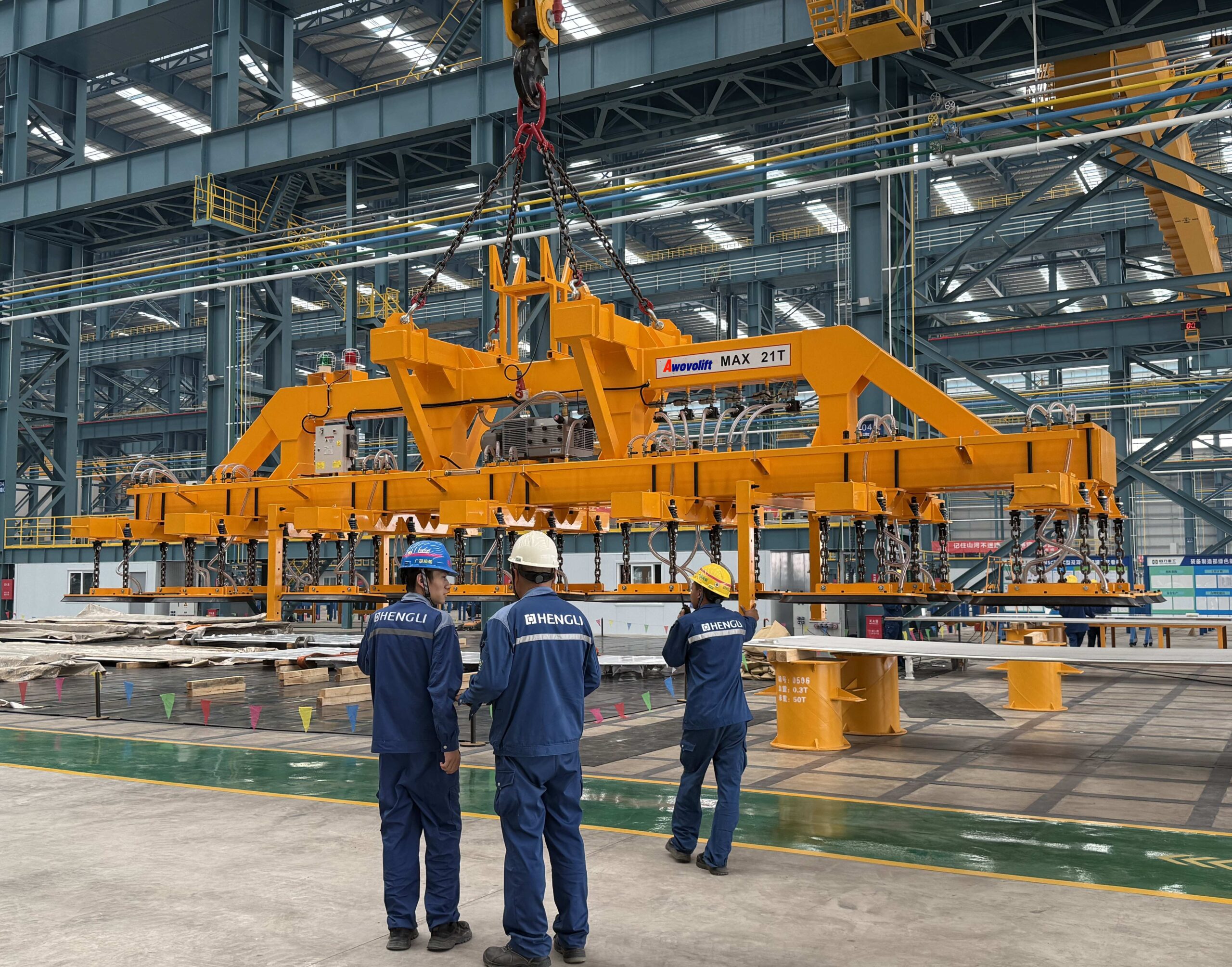
- High weight capacity: A 4’×8′ sheet of ¼” steel plate weighs approximately 326 lbs. Vacuum lifters for steel typically feature multiple large-diameter pads and dual-circuit vacuum reserve tanks to prevent accidental release even if power fails momentarily.
- Surface texture: Sheets with heavy mill scale or slight pitting require pads with high elasticity to conform to irregularities. Look for lifters that specify “rough surface” capability.
Best practice: For carbon steel fab stations, choose a sheet metal vacuum lifter with a minimum factor of safety of 2:1, and always verify pad compatibility with the expected oil type and thickness. Integrated pressure/vacuum switches alert the operator if seal quality drops, preventing dangerous drops.
Aluminum Plate Lifting: Gentle Handling for Non-Ferrous Precision
Aluminum plate lifting presents a different set of challenges. Aluminum is non-magnetic, so magnetic lifters are useless. More importantly, aluminum surfaces—especially brushed, anodized, or pre-finished—are highly susceptible to scratches, marring, and even fingerprint staining. A vacuum lifter for aluminum must deliver a delicate touch.
- Non-marking pads: Use suction cups made from silicone or natural rubber blends that leave zero residue and minimal contact marks. Some systems employ a “low-marking” surface texture.
- Anti-scratch coating: Even the vacuum pad perimeter can cause superficial blemishes. Premium aluminum lifters include a PTFE (Teflon) or similar coating on the contact edge, or use a flow-through design that creates a cushion of air before full contact.
- Thin sheet challenges: Thin aluminum (e.g., 0.040″) can oil-can or bend under vacuum. Adjustable vacuum generators and wide, flat pads distribute force evenly to prevent distortion. It’s also beneficial to include a sensor that monitors sheet thickness or deflection.
In industries like aerospace and automotive, where aluminum plate surface integrity is paramount, the right vacuum lifter eliminates the need for protective film removal and re-application, saving labor and material costs.
.png)
Stainless Steel Sheet Vacuum Lifter: Preserving the Perfect Finish
A stainless steel sheet vacuum lifter must meet the highest aesthetic standards. Stainless steel is often chosen for its corrosion resistance and hygienic appearance in food processing, medical equipment, and architectural applications. Any visible scratch can lead to rejection of the entire part.
- Zero surface contact complications: While vacuum lifters inherently reduce contact, some operators fear suction marks. The reality is that high-quality lifters with proper sealed edges and clean pads leave no trace. However, for mirror-finish or #8 polished sheets, you may need “contactless” vacuum technology that uses Bernoulli or Coanda-effect lifters. These float the sheet on an air gap, completely avoiding touch.
- Cleanliness: Food-grade applications require pads that are FDA-compliant and easily washable. Silicone pads are often preferred, as they withstand high-temperature washdowns.
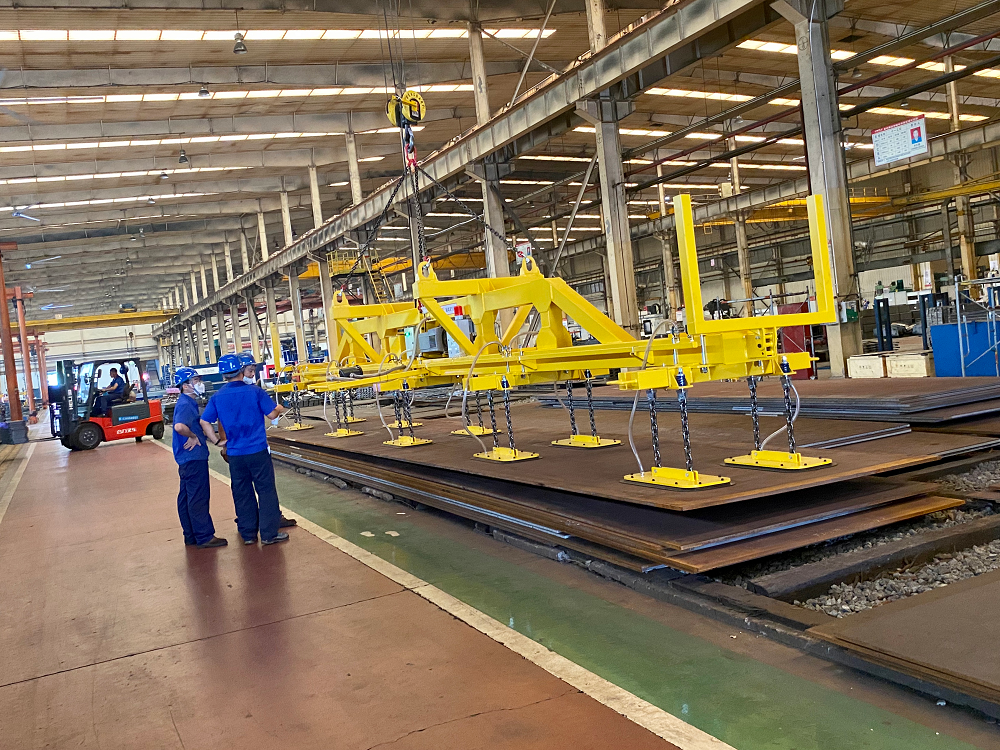
- Weight and payload: Stainless steel is denser than carbon steel; handling sheets of 16 gauge or thinner still demands robust lift capability. Many stainless sheets are 4’×10′ or 5’×10′, requiring long beam lifters with multiple vacuum zones that can be selectively turned off to match sheet dimensions.
Adopting a dedicated stainless steel vacuum lifter at the laser loading station and press brake can dramatically reduce scrap from surface defects, which often account for 5–8% of total material waste in high-finish shops.
.jpg)
Implementing Vacuum Lifters at Every Station: A Blueprint for Efficiency
The true transformation happens when vacuum handling becomes the standard for every material movement inside the shop. Here’s how to implement a sheet metal vacuum lifter at each key station, creating a seamless flow from inventory to shipment.
1. Raw Material Storage & Loading Station
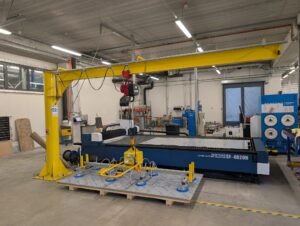
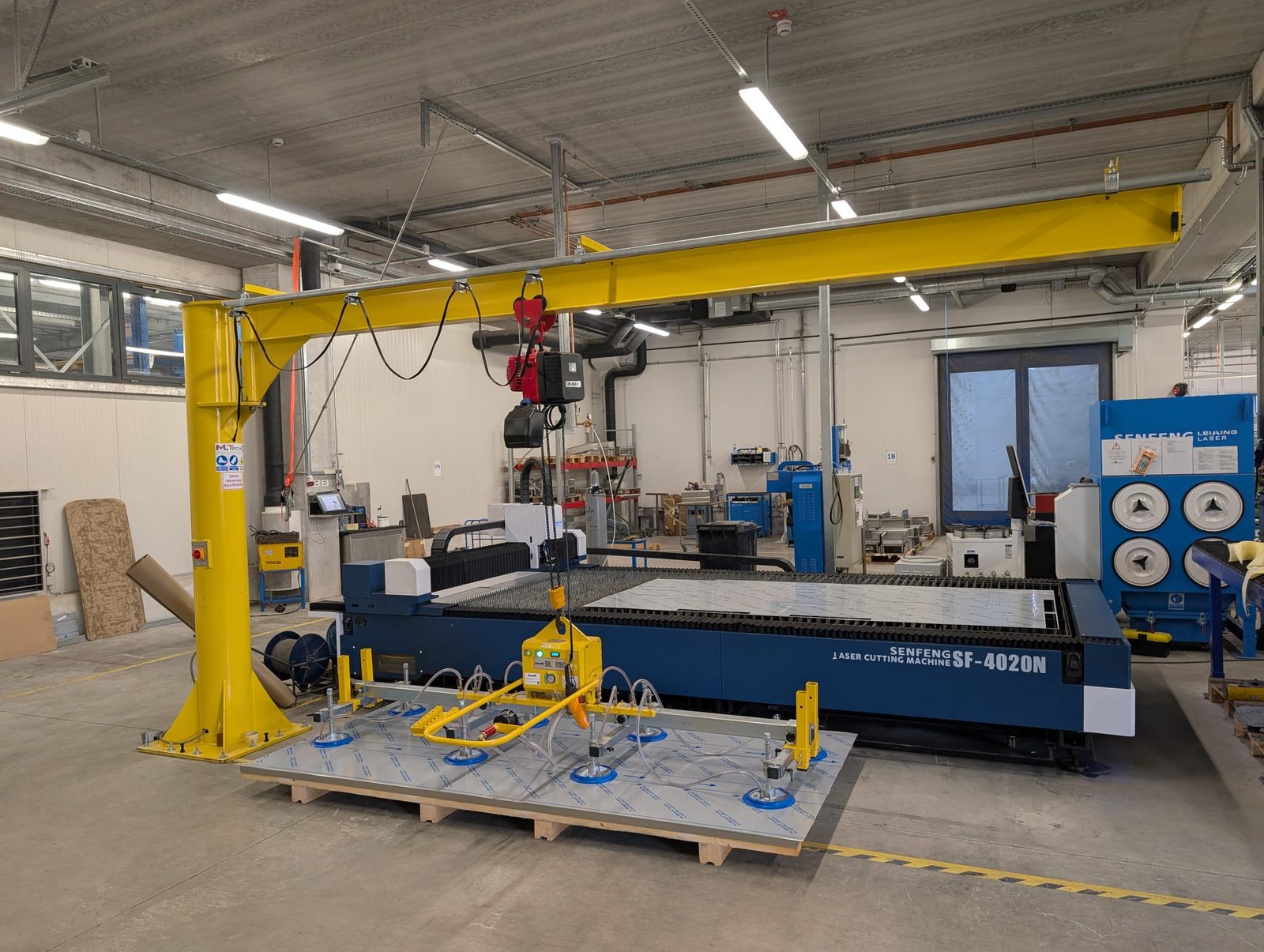
Vacuum lifters mounted on jib cranes or overhead bridge cranes allow a single operator to pick entire stacks or individual sheets from pallets and place them onto a conveyor or directly onto the laser/plasma cutting bed. Look for systems with long vertical stroke to reach into deep pallets. For mixed-metal inventories, use a lifter with easily interchangeable pad kits optimized for each material type—one crane serves multiple needs.
2. Laser / Plasma / Waterjet Cutting
After cutting, parts must be removed without disturbing the skeleton or damaging delicate edges. Vacuum lifters with zone control can lift the finished sheet off the table while leaving the scrap grid behind. For high-mix production, a programmable vacuum lifter with individual pad actuation can pick multiple small parts simultaneously, boosting offload speed by 70% or more compared to manual removal.
3. Deburring & Finishing
Transfer sheets and parts from the cutting station to deburring machines or tumblers. Vacuum lifters ensure that even freshly cut sharp edges don’t harm workers or mar adjacent parts. A lifter with a rotating head allows easy reorientation of the part for edge finishing.
4. Press Brake & Forming
Heavy formed parts need precise positioning into the press brake. Vacuum lifters equipped with a tilt mechanism enable ergonomic loading at various angles. For smaller parts that are formed in multiples, a vacuum lifter with a custom foam matrix can pick several parts at once, matching the press brake’s backgauge pattern. This reduces cycle time dramatically and eliminates the need for a second person to support the material.
5. Welding & Assembly
Vacuum lifters help position large aluminum or stainless steel sheets for welding, holding them in place while tacking begins. This replaces C-clamps and costly fixtures for one-off fabrications. Moreover, using a vacuum gripper to turn or reposition the assembly eliminates physically demanding manipulation and improves safety.
6. Quality Inspection & Packaging
Before shipping, parts undergo final cleaning and inspection. Vacuum lifters provide non-contact handling for stainless and aluminum cosmetic surfaces, keeping them pristine. In packaging, sheets can be lifted and inserted into protective wrapping or crates without finger contact, ensuring the customer receives a flawless product.
Case Study: How One Fab Shop Reduced Cycle Time by 40%
Consider a mid-size custom fabrication shop in Ohio that processes approximately 300 sheets daily—a mix of carbon steel, aluminum, and stainless steel. Prior to vacuum lifters, they used a combination of manual lifting, overhead magnets, and chain slings. The results were telling:
- Average sheet placement time: 4.2 minutes (two operators)
- Surface defect rate on stainless/aluminum: 12% (most required rework or were scrapped)
- 2 reportable back injuries in 18 months
- Laser cutting machine utilization: only 64% due to slow loading
After installing three sheet metal vacuum lifters—a dedicated carbon steel unit with oil-resistant pads, an aluminum plate lifter with low-marking silicone pads, and a stainless steel sheet vacuum lifter with zone control—the shop transformed its workflow. Each lifter was mounted on a pillar jib crane at the laser cutting area, the press brake cell, and the inspection station.
Results after 6 months:
- Sheet placement time reduced to 1.1 minutes (single operator)
- Surface defect rate dropped to 0.5% – nearly eliminated
- Zero handling-related injuries
- Machine utilization climbed to 88%
- Overall production output increased by 40%, with the same crew and equipment
This shop now treats vacuum handling as non-negotiable infrastructure. The initial investment paid for itself in under five months through labor savings, reduced scrap, and higher throughput.
Selecting the Right Vacuum Lifter: Key Technical Considerations
Choosing the right vacuum lifter for your shop isn’t a one-size-fits-all decision. The following parameters will guide you toward a system that delivers maximum return on investment:
- Load capacity and safety factor: Calculate the heaviest sheet you handle, then add a safety margin. Reputable manufacturers rate lifters with a minimum 2:1 safety factor, but 3:1 is recommended for critical applications.
- Pad configuration and zone control: For varied sheet sizes, select a lifter with individually controllable suction zones. This reduces vacuum consumption and lets you handle small parts without reconfiguring the entire frame.
- Material compatibility: Ensure the pad material, hardness, and profile are matched to your primary metals—oil-resistant for carbon steel, soft and non-marking for aluminum, and ultra-clean for stainless steel.
- Lifting height and stroke: Consider the distance between your storage pallet, cutting table, and downstream equipment. A lifter with adjustable vertical travel or a telescopic mast can bridge these gaps efficiently.
- Power source and backup: Electric or pneumatic vacuum generators are the norm. Battery-powered units offer portability, but always confirm the system has a vacuum reservoir and audible/visual alarms for safety.
- Ergonomics and controls: Look for ergonomic handles, intuitive pendant controls, and swivel or tilt functions that let the operator align sheets without manual force.
- Certifications and compliance: Choose lifters that meet relevant standards (e.g., CE marking) and come with thorough documentation, including load ratings, inspection schedules, and operator manual.
Investing in a well-specified vacuum lifter delivers immediate, measurable benefits. By eliminating manual handling from your workflow, you protect your workforce, cut material waste, and unlock the full capacity of your existing equipment.
Take the Next Step Toward a Fully Optimized Fab Workplace
Every station in your fabrication floor can benefit from vacuum lifting technology. From the moment raw plate arrives to the final polished product ready for shipment, a sheet metal vacuum lifter ensures that movement is fast, safe, and damage-free. The case study above is just one example—shops across the metals industry are rediscovering how much capacity they already had, once material handling stopped slowing them down.
If you’re ready to evaluate a vacuum lifter for your carbon steel, aluminum, or stainless steel operations, start by reviewing the technical recommendations in this guide and consulting with a qualified lifting specialist. With the right system in place, you’ll not only boost efficiency—you’ll transform the way your shop works.