Waste Reduction and Production Line Integration: How Vacuum Lifters Minimize Product Damage and Loss
Vacuum lifting systems directly reduce product damage and material loss on production lines by replacing mechanical clamps, hooks, and manual handling with controlled, non-marring suction. A properly selected glass vacuum lifter, sheet metal vacuum lifter, or vacuum tube lifter grips materials such as carbon steel, aluminum plate, and stainless steel sheet without scratching, denting, or dropping them. When integrated into loading, cutting, forming, and assembly workflows, these tools lower scrap rates, reduce rework, protect workers from strain, and keep production flowing with fewer interruptions.
This article explains how vacuum lifting technology works, why it is effective across different materials, and how to integrate it into a production line for measurable waste reduction. You will also find selection criteria, maintenance guidance, and answers to common questions about vacuum lifting.
The Real Cost of Product Damage and Material Loss
Every scratched glass panel, dented aluminum plate, or bent stainless steel sheet represents more than the cost of the material itself. Damage on a production line creates hidden costs that compound quickly:
- Scrap and disposal: Damaged sheets often cannot be reworked and must be discarded or sold at a reduced grade.
- Rework labor: Minor damage may require polishing, straightening, or refinishing, which pulls operators away from value-adding tasks.
- Production downtime: Replacing a damaged component interrupts line flow, especially in just-in-time or continuous manufacturing environments.
- Customer returns and reputation loss: Defects that reach downstream customers can lead to rejected shipments, chargebacks, and lost contracts.
- Workplace injuries: Manual lifting of heavy or awkward sheets increases musculoskeletal strain, leading to lost time and higher insurance costs.
Manual handling and mechanical gripping methods contribute to many of these losses. Suction-based vacuum lifting offers a repeatable, low-impact alternative that holds materials securely without concentrating force on small contact points.
How Vacuum Lifting Technology Works
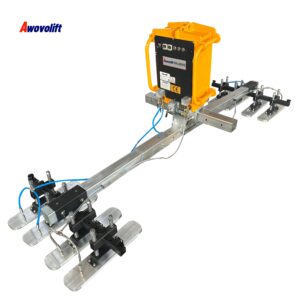
A vacuum lifter uses suction cups or pads connected to a vacuum pump, Venturi generator, or self-sealing vacuum circuit. When the pads contact a non-porous surface, the system removes air from the space between the pad and the load. Atmospheric pressure then pushes the load against the pad, creating a secure grip.
Key components of a typical industrial vacuum lifting system include:
- Suction pads or cups: Made from rubber, polyurethane, silicone, or nitrile, selected for the material surface and temperature.
- Vacuum generator: An electric pump, compressed-air Venturi, or blower that creates the required vacuum level.
- Vacuum reservoir or safety tank: Maintains holding force briefly if power or air supply is interrupted.
- Control valves and gauges: Allow operators to engage, release, and monitor vacuum pressure.
- Lifting frame or tube: Connects the pads to a hoist, crane, jib arm, or manipulator.
The lifting force depends on the vacuum level and the total effective pad area. Because the load is held across a broad surface, pressure is distributed evenly. This prevents the point-load marks, edge deformation, and stress concentrations common with clamps or slings.
Why Vacuum Lifting Reduces Waste on Production Lines
Waste reduction is not only about avoiding visible damage. Vacuum lifters improve process consistency and reduce variability, which supports lean manufacturing goals. The main mechanisms include:
1. Non-Marring Surface Contact
Vacuum pads made from soft elastomers conform to flat or slightly textured surfaces without scratching. This is essential for pre-finished materials such as polished stainless steel, coated aluminum, painted sheet metal, and architectural glass. The absence of clamp marks means fewer rejected parts and less polishing or touch-up work.
2. Controlled, Balanced Lifting
A vacuum lifter with multiple pads distributes weight evenly across the sheet. This prevents sagging, bowing, or bending that can occur when a long sheet is lifted from only one or two points. Balanced lifting is especially important for thin-gauge sheet metal and large glass panels, where even small deflections can cause cracking or permanent deformation.
3. Reduced Human Error
Manual handling often leads to accidental drops, collisions with machinery, and edge impacts. Vacuum lifting equipment includes check valves and safety reservoirs that maintain grip if power fluctuates, reducing the chance of a sudden release. Operators also use less physical force, which improves control and precision during placement.
4. Faster, More Stable Handling
Because vacuum grippers attach and release quickly, they reduce the time each sheet spends in transition. Shorter handling cycles mean fewer opportunities for accidental contact with racks, guides, or other workpieces. Stable transport also allows higher line speeds without increasing damage rates.
Material-Specific Vacuum Lifting Applications
Different materials require different pad compounds, vacuum levels, and lifting configurations. Below are the most common applications where vacuum lifters reduce product damage and loss.
Glass Vacuum Lifter
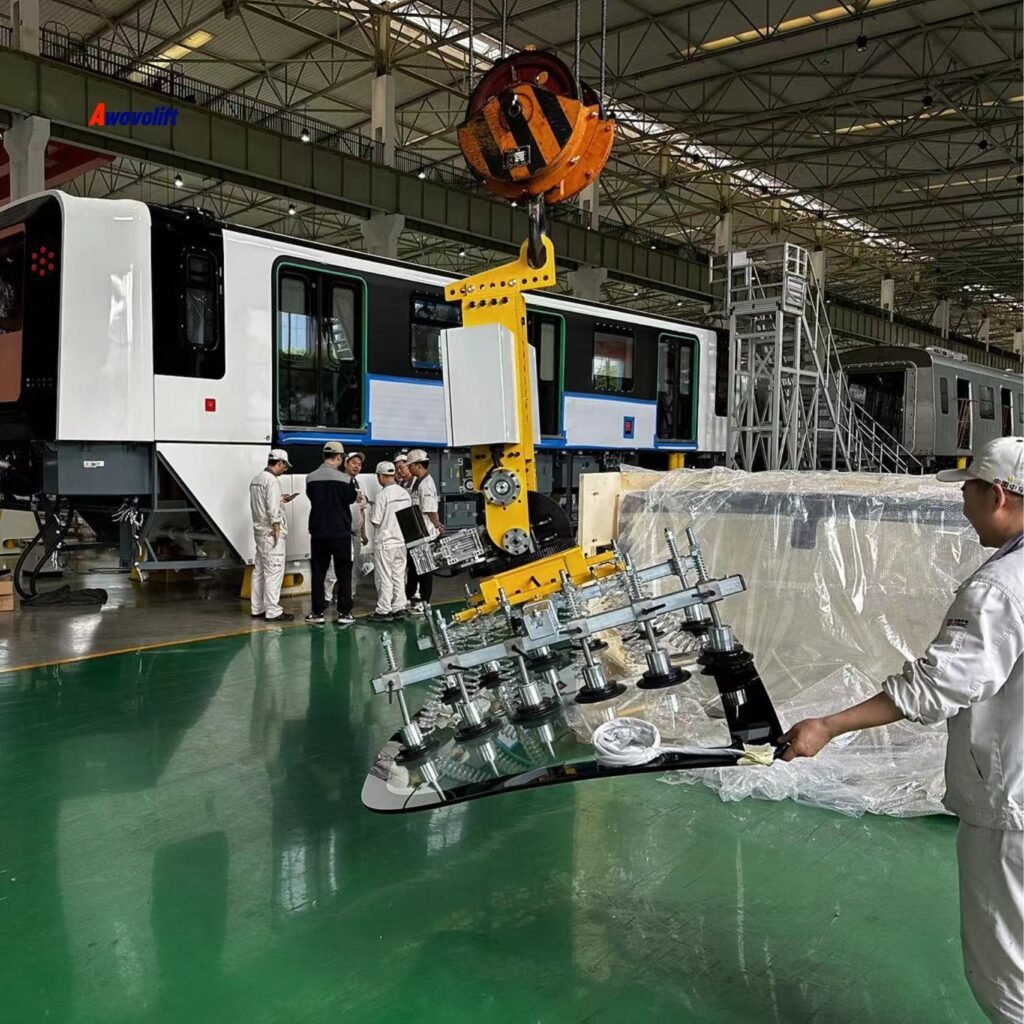
A glass vacuum lifter is designed to handle flat or curved glass panels without scratching, chipping, or stressing the surface. Glass is particularly sensitive to point loads and uneven support. Suction cups spread the gripping force across a wide area, preventing cracks that can start at edges or concentrated pressure points.
Glass vacuum lifters are used in:
- Insulated glass unit assembly
- Automotive windshield and window installation
- Architectural glazing and curtain wall construction
- Solar panel manufacturing
- Display and mirror production
When selecting a glass vacuum lifter, choose pads rated for smooth, non-porous surfaces. Many systems include spring-loaded or articulated pad mounts to accommodate slight curvature and prevent edge loading. A vacuum reservoir is critical for glass because a sudden loss of grip can cause catastrophic breakage and safety hazards.
For production lines handling multiple glass sizes, a modular pad arrangement allows operators to configure the lifter quickly. Integrated pressure gauges and audible alarms help confirm that the vacuum level is sufficient before lifting.

Sheet Metal Vacuum Lifter
A sheet metal vacuum lifter handles thin and thick sheet metal without bending or scratching. Mechanical tongs and clamps often mark the surface or create edge burrs. Vacuum lifting eliminates those defects by gripping the flat face of the sheet.
Common sheet metal applications include:
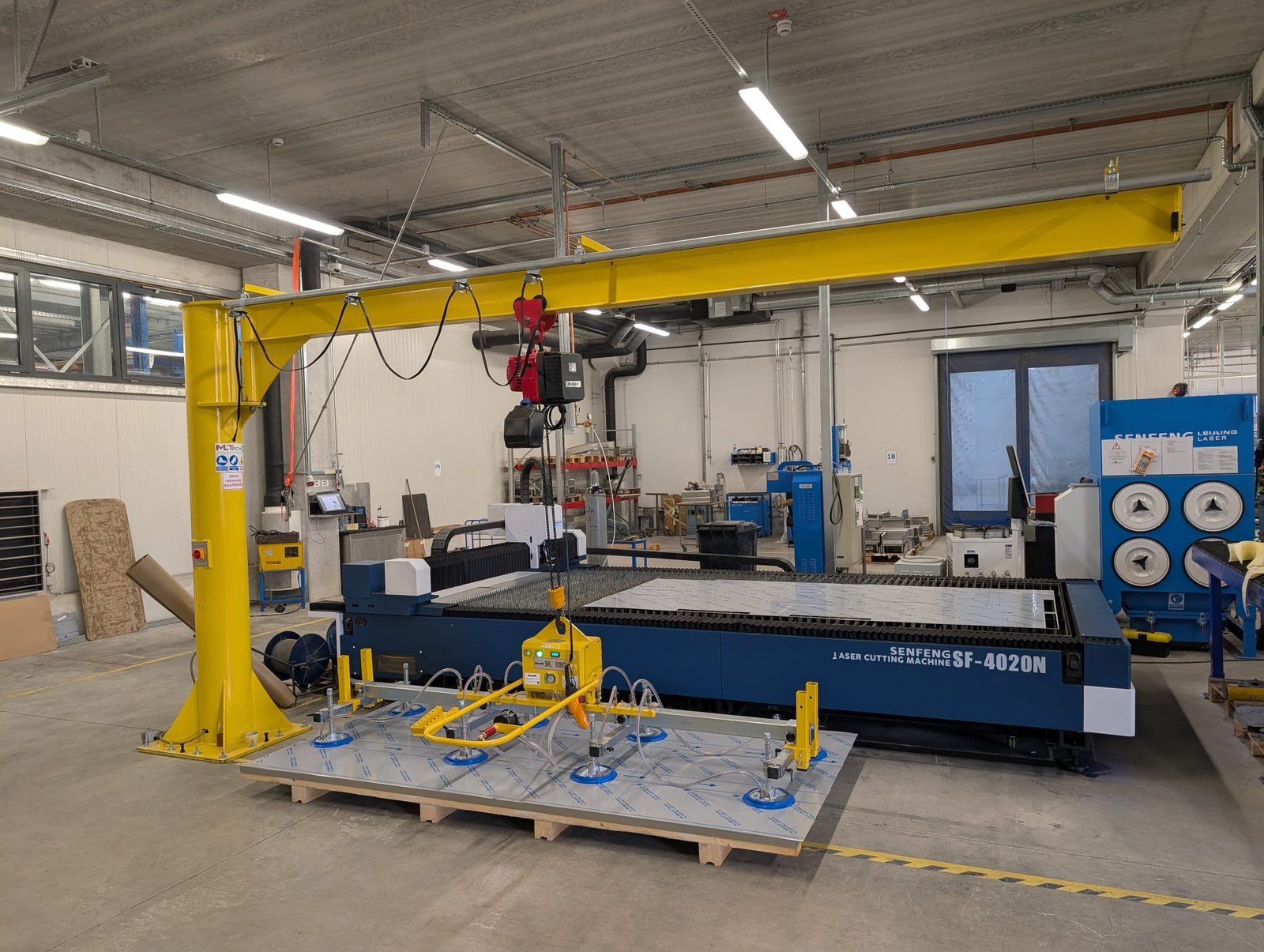
- Loading laser cutting and punching machines
- Feeding press brakes and stamping presses
- Moving blanks between work cells
- Stacking and destacking operations
- Loading sheets into roll forming lines
Sheet metal lifters can be mounted on overhead cranes, jib arms, or mobile floor units. For oily or lightly textured sheet metal, pads made from oil-resistant nitrile or polyurethane provide reliable grip. If the sheet is perforated or embossed, a higher-flow vacuum blower may be needed rather than a standard pump.

Carbon Steel Lifting
Carbon steel sheets and plates are dense and often have a mill scale or oil-coated surface. Vacuum lifting handles carbon steel efficiently because the surface is generally smooth enough for suction pads, even when slightly oily. The key is to select pad materials that resist oil degradation and maintain friction.
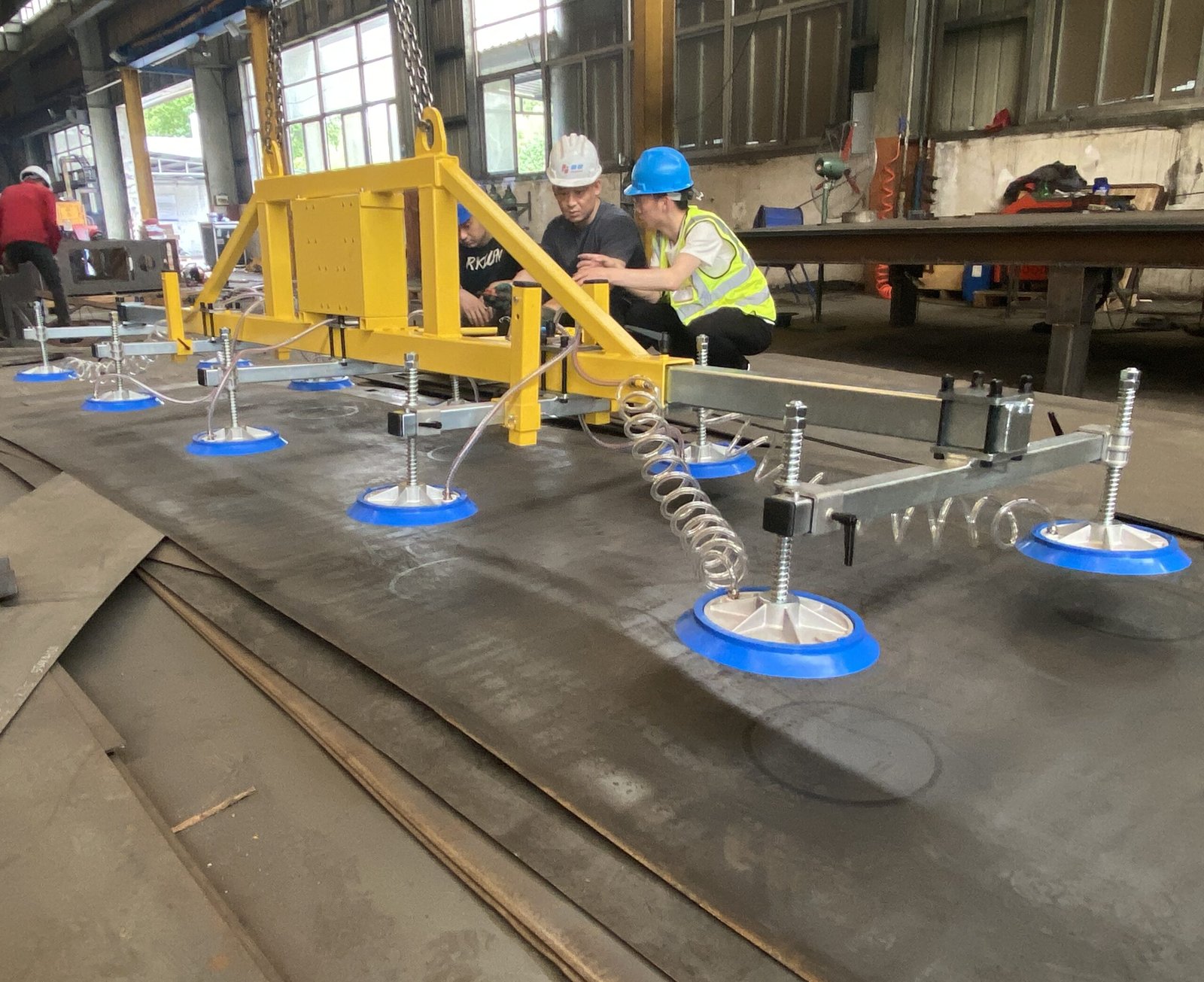
For carbon steel plate lifting, capacity and pad layout are the primary considerations. Thicker plates are heavy, so the vacuum system must generate enough lifting force with a safety factor. Multiple pads spaced along the length prevent sagging and keep the plate level during transport.
Carbon steel applications include:
- Feeding plasma and oxy-fuel cutting tables
- Loading machining centers
- Moving plates in shipbuilding and structural fabrication
- Stacking and sorting in steel service centers
Using a vacuum lifter for carbon steel reduces edge damage and surface scratches that can occur with chain slings or magnetic lifters. It also avoids residual magnetism, which can interfere with welding and machining.
Aluminum Plate Lifting
Aluminum plate lifting requires special attention because aluminum is softer and more easily scratched or dented than steel. Even small clamp marks can reject a polished or anodized aluminum panel. Vacuum lifters with soft polyurethane or silicone pads protect the surface while providing a secure grip.
Aluminum plates are used in aerospace, automotive, marine, and architectural applications. Common handling tasks include:
- Loading aluminum sheets into CNC routers
- Feeding aluminum blanks into stamping operations
- Moving pre-finished or coated panels
- Stacking sheets after shearing or slitting
Because aluminum is non-magnetic, vacuum lifting is often the preferred automated handling method. It provides a reliable grip without the surface marking risks of mechanical clamps. For thin aluminum sheet, use a larger number of smaller pads to distribute force and prevent local deformation.
Stainless Steel Sheet Vacuum Lifter
A stainless steel sheet vacuum lifter protects the high-value surface finish that makes stainless steel desirable. Stainless steel is often specified with a brushed, polished, or mirror finish that shows every scratch. Mechanical grippers can leave visible marks, and slings can cause edge dents or contamination.
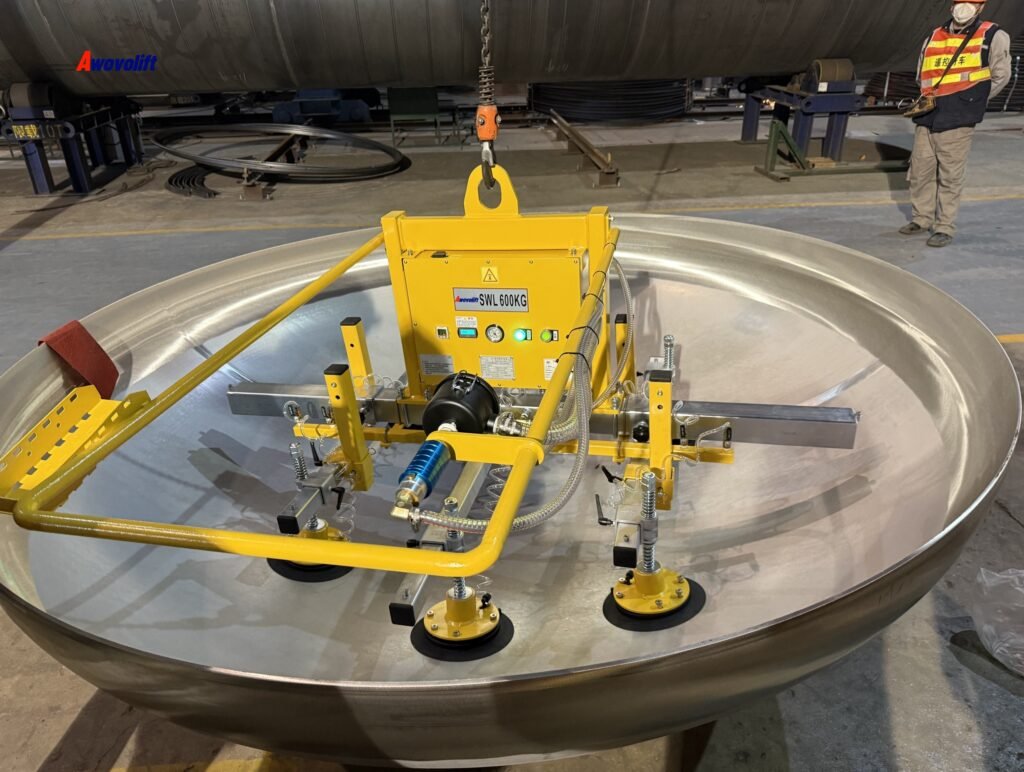
Vacuum lifters handle stainless steel sheet without touching the visible face with metal components. Suction pads are the only contact points, and they are made from non-marking materials. This is critical for:
- Food processing equipment fabrication
- Pharmaceutical and cleanroom panel production
- Architectural cladding and elevator panels
- Appliance manufacturing
- Commercial kitchen fabrication
For mirror-finish stainless steel, select pads with a very smooth contact surface and avoid sliding the pads after vacuum engagement. Some vacuum lifters include a quick-release feature that breaks the vacuum seal cleanly without dragging the pad across the surface.

A vacuum tube lifter is a flexible, operator-guided lifting device that uses a suction foot at the end of a vertical tube. The operator controls the lift with simple up/down movements, and the tube supports the load weight. Vacuum tube lifters are ideal for smaller sheets, boxes, and components that require precise placement.
Advantages of vacuum tube lifters include:
- High maneuverability in tight production cells
- Fast attach and release cycles
- Reduced operator fatigue compared to manual lifting
- Ability to handle light to moderate loads with one hand
- Compatibility with overhead rail or floor-mounted jib systems
Vacuum tube lifters are often used alongside larger sheet lifters for handling smaller blanks, cut parts, or packaging. They reduce product damage by giving the operator fine control over placement, reducing the risk of bumping parts against fixtures or racks.
Integrating Vacuum Lifters into the Production Line
Successful waste reduction depends on more than buying the right lifter. Integration into the existing workflow determines whether the equipment delivers consistent results. Consider these integration points:
1. Map the Material Flow
Identify every point where sheets or plates are manually handled, stacked, or transferred. Look for signs of damage such as scratches, dents, edge marks, and dropped parts. These are the highest-priority locations for vacuum lifting.
2. Match the Lifter to the Load
The lifter capacity, pad layout, and vacuum source must match the maximum load weight, dimensions, surface finish, and porosity. Use a safety factor of at least 2:1 for horizontal lifting and higher for vertical or rotating lifts.
3. Choose the Right Mounting System
Vacuum lifters can be mounted on:
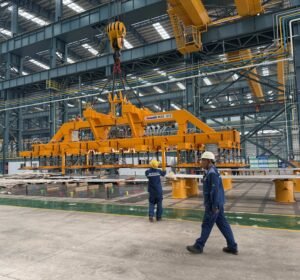
- Overhead bridge cranes for long travel and large sheets
- Jib cranes for localized work cells
- Gantry systems for automated loading
- Mobile floor lifters for flexible use
- Robotic arms for fully automated lines
The mounting system should minimize swing and allow precise positioning. A rigid or semi-rigid connection often improves placement accuracy compared to a free-swinging hook.
4. Automate Where Possible
On high-volume lines, automated vacuum grippers integrated with robots or gantries can reduce cycle times and eliminate variability. Even semi-automated systems with operator assist can cut damage by providing consistent grip and release.
5. Train Operators on Proper Use
Even the best vacuum lifter can cause damage if used incorrectly. Training should cover:
- Checking pad condition before each shift
- Verifying vacuum level before lifting
- Positioning pads fully on the sheet surface
- Avoiding side loading or sudden movements
- Releasing the load only when fully supported
Documented standard operating procedures help maintain consistent results across shifts.
Selecting the Right Vacuum Lifter: Key Criteria
The table below summarizes the main selection factors for different materials and applications.
| Selection Factor | Glass | Sheet Metal | Carbon Steel | Aluminum Plate | Stainless Steel |
|---|---|---|---|---|---|
| Surface finish | Smooth, polished | Mill, coated, oily | Mill scale, oily | Mill, brushed, anodized | Brushed, polished, mirror |
| Recommended pad material | Silicone, polyurethane | Nitrile, polyurethane | Oil-resistant nitrile | Polyurethane, silicone | Non-marking polyurethane |
| Typical vacuum source | Electric pump with reservoir | Pump or Venturi | Electric pump | Electric pump | Electric pump with reservoir |
| Safety requirement | High, due to breakage risk | Medium to high | High, due to weight | Medium, surface protection | High, surface and weight |
| Common mounting | Crane, manipulator | Crane, jib, gantry | Crane, gantry | Crane, jib, robot | Crane, manipulator |
When in doubt, request a technical evaluation from the lifter manufacturer. Provide material dimensions, weight, surface condition, lift orientation, and cycle rate. A proper evaluation ensures the pads, vacuum pump, and frame are matched to the application.
If you are planning a new installation or upgrading an existing line, download our free vacuum lifter technical scheme to compare configurations and safety features.
Maintenance and Safety Considerations
Vacuum lifters are reliable, but they require routine inspection and maintenance to prevent sudden failure. A failed pad or clogged filter can lead to dropped loads and product damage, as well as serious injury.
Daily Checks
- Inspect suction pads for cuts, wear, cracks, or embedded debris.
- Verify the vacuum gauge reaches the specified level before each lift.
- Listen for air leaks in hoses and fittings.
- Test the safety check valve and vacuum reservoir function.
- Clean pads with a compatible cleaner if they lose grip.
Periodic Maintenance
- Replace filters in the vacuum pump or Venturi system according to the manufacturer’s schedule.
- Lubricate moving parts on the lifting frame and tube lifter.
- Inspect structural welds, bolts, and pivot points for fatigue or loosening.
- Calibrate pressure gauges and alarms.
- Check electrical connections and emergency stop functions.
Safety Standards
Industrial lifting equipment should comply with relevant local regulations and standards. In the United States, OSHA provides ergonomics guidance for manual material handling, and vacuum lifting can help reduce musculoskeletal strain. For more information, see OSHA’s ergonomics resources. Always follow the lifter manufacturer’s rated capacity and never exceed the safety factor.
Common Questions About Vacuum Lifting and Waste Reduction
Can vacuum lifters handle oily or dirty sheet metal?
Yes, but pad material and vacuum flow matter. Oil-resistant nitrile or polyurethane pads maintain grip on lightly oiled surfaces. For heavy oil or debris, use a higher-flow vacuum blower and clean the pads regularly to prevent loss of friction.
What is the difference between a vacuum tube lifter and a sheet metal vacuum lifter?
A vacuum tube lifter is an operator-guided device for smaller, lighter loads that need precise placement. A sheet metal vacuum lifter is typically a larger frame with multiple suction pads mounted on a crane or gantry for handling full sheets or plates. Both reduce damage compared to manual handling, but they suit different load sizes and production rates.
How do I prevent vacuum pad marks on polished stainless steel or coated aluminum?
Select pads made from very soft, non-marking materials such as silicone or special polyurethane. Ensure the pad is clean and avoid dragging it across the surface. Release the vacuum fully before lifting the pad away. For mirror finishes, consider pads with a smooth, low-friction contact face.
Can vacuum lifters be used in automated production lines?
Yes. Vacuum grippers are widely used on robotic arms, gantry loaders, and automated destacking systems. They provide rapid, repeatable gripping without mechanical clamping, which supports high-speed automation and reduces part damage.
What safety features should a vacuum lifter have?
Look for a vacuum reservoir or safety tank, check valves, pressure monitoring, audible and visual alarms, and a rated capacity with an appropriate safety factor. These features prevent sudden release if power or air supply is interrupted and give operators clear feedback before lifting.
Conclusion: Reduce Waste by Rethinking How You Lift
Product damage and material loss on a production line are often accepted as unavoidable costs. In reality, many of those losses come from the handling method itself. Mechanical clamps, slings, and manual lifting concentrate force, create scratches and dents, and increase the chance of drops.
A glass vacuum lifter, sheet metal vacuum lifter, or vacuum tube lifter changes that equation. By gripping materials across a broad, non-marring surface, vacuum lifting protects carbon steel, aluminum plate, and stainless steel sheet throughout the production process. The result is less scrap, less rework, fewer injuries, and a smoother flow from raw material to finished product.
To evaluate which vacuum lifting configuration fits your production line, review the material, weight, surface finish, and cycle rate. Then compare options based on pad material, vacuum source, safety features, and mounting system. For a detailed comparison of lifting capacities, pad layouts, and integration options, download our free vacuum lifter technical scheme today.