Modular Vacuum Lifter Design: Building Your Perfect Solution
A modular vacuum lifter is a configurable material-handling system built from interchangeable vacuum pads, beams, pump units, and control modules. Whether you are moving glass, sheet metal, roof panels, sandwich plates, or MDF, this approach lets you build a lifting solution that matches your load size, surface condition, and production environment without paying for unnecessary capacity. The 236 modular design concept gives you a repeatable framework: select the right pad technology, size the vacuum circuit properly, distribute the load across a rigid frame, and add safety systems that meet your local regulations.

What Is a Modular Vacuum Lifter?
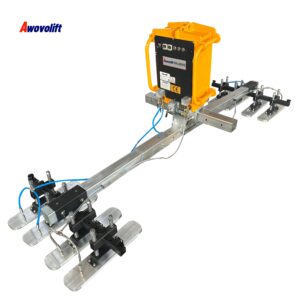
Unlike a fixed one-piece lifter, a modular vacuum lifter is assembled from standardized components that can be swapped, extended, or reconfigured as your production needs change. This includes vacuum suction pads, crossbeams, main lift beams, vacuum generators or pumps, valves, hoses, filters, and control panels. By changing pad positions, beam lengths, or the vacuum source, the same core system can often handle multiple material types.
The word “modular” matters because material handling rarely stays the same for years. A workshop may lift flat glass today and textured metal panels next month. A building products manufacturer may handle MDF boards in one line and insulated roof panels in another. A modular design lets you reuse the most expensive parts — the vacuum pump and control system — while adapting the pad and frame setup to each job.
Why a Modular Design Wins in Material Handling
A well-designed modular vacuum lifter offers several practical advantages over custom-welded, single-purpose lifters:
- Faster adaptation: You can change pad configuration or beam length in minutes, not weeks.
- Lower total cost of ownership: One vacuum source can serve multiple lifting heads.
- Simpler spare parts management: Standard pad seals, valves, and filters are easier to stock.
- Scalability: Start with a compact frame and add modules for longer or heavier loads.
- Safer upgrades: New safety components can be retrofitted to an existing frame.
This does not mean every modular lifter is simple. It still requires correct engineering, especially when lifting porous, flexible, or textured surfaces. The value of a modular system is that the engineering is embedded in the modules and the selection rules, rather than reinvented for every new load.
The Physics Behind Vacuum Lifting
Understanding the basic physics helps you avoid undersized systems and dangerous assumptions. A vacuum lifter holds a load because atmospheric pressure pushes the pad against the material while the vacuum pump removes air from the sealed cavity. The holding force depends on two factors:
Lifting force = effective pad area × pressure differential
In metric terms, if you generate a vacuum level of -0.6 bar, the pressure differential is approximately 0.6 bar. That equals about 6 newtons of force per square centimeter of effective pad area. So a pad with 200 cm² of effective contact area produces roughly 1,200 N, or about 122 kg of theoretical holding force.
However, the theoretical number is never the whole story. You must apply a safety factor, typically 2:1 for smooth, non-porous materials and 3:1 or higher for porous, rough, or flexible surfaces. This accounts for leakage, dynamic loads during acceleration, pad wear, dust, oil film, and minor surface irregularities. For MDF, unsealed wood, or rough concrete, the safety factor should be even more conservative because air leaks continuously through the material.
Vacuum Pads and Sealing Elements
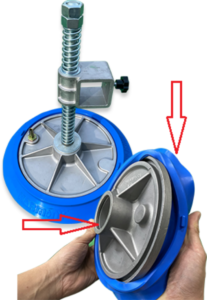
Pads are the contact point between the lifter and the load. Their shape, material, and seal design determine how well the system handles different surfaces. Flat pads work for smooth glass and painted sheet metal. Deep foam pads seal better on corrugated roof panels or slightly textured surfaces. Bellows pads compensate for height differences and help handle curved or flexible sheets.
Common pad materials include nitrile, silicone, polyurethane, and natural rubber. Silicone is often preferred for glass because it leaves no marks. Nitrile and polyurethane resist oil and wear on metal sheets. For MDF and other porous boards, a high-flow vacuum source plus a soft, conforming seal usually works better than a hard flat seal.
Support Frame and Crossbeams
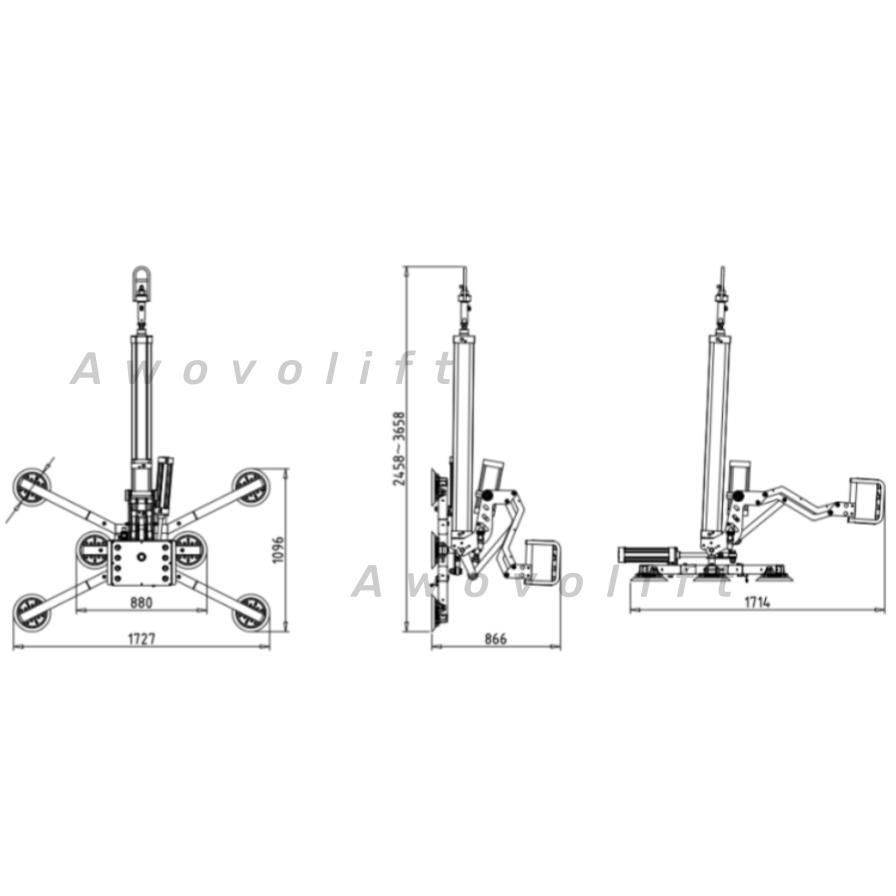
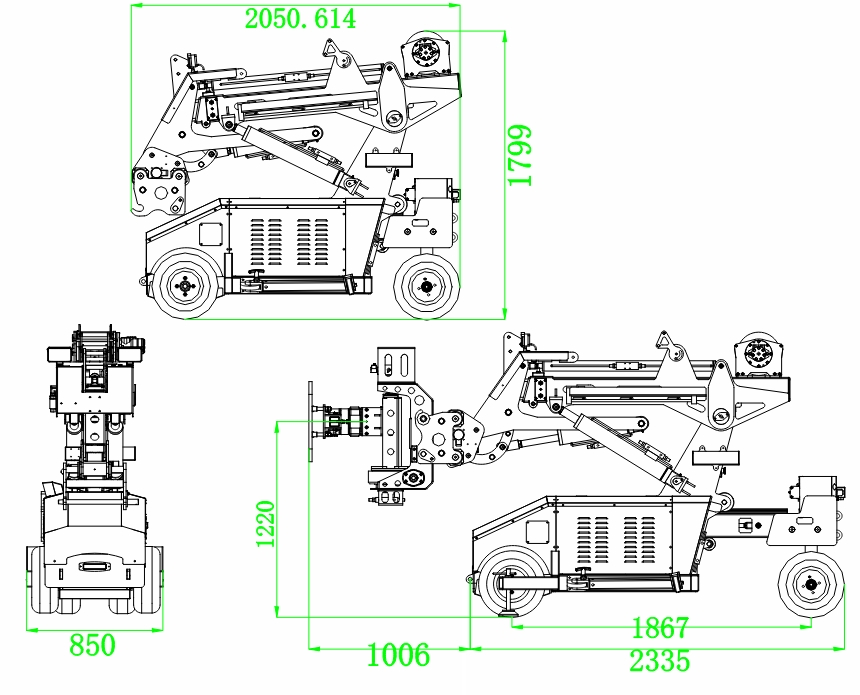
The frame carries the pads and transfers the lifting force to the crane or hoist. Modular frames are typically made from aluminium profiles or steel tubes with slotted holes so pads can be repositioned. Crossbeams must be rigid enough to prevent excessive bending. If the frame flexes too much, the outer pads lose contact and the load may tip or drop.
For long loads like roof panels or large glass sheets, a multi-beam frame with adjustable pad spacing is essential. For heavy sheet metal stacks, you may need more pads and a central lift point that balances the load.
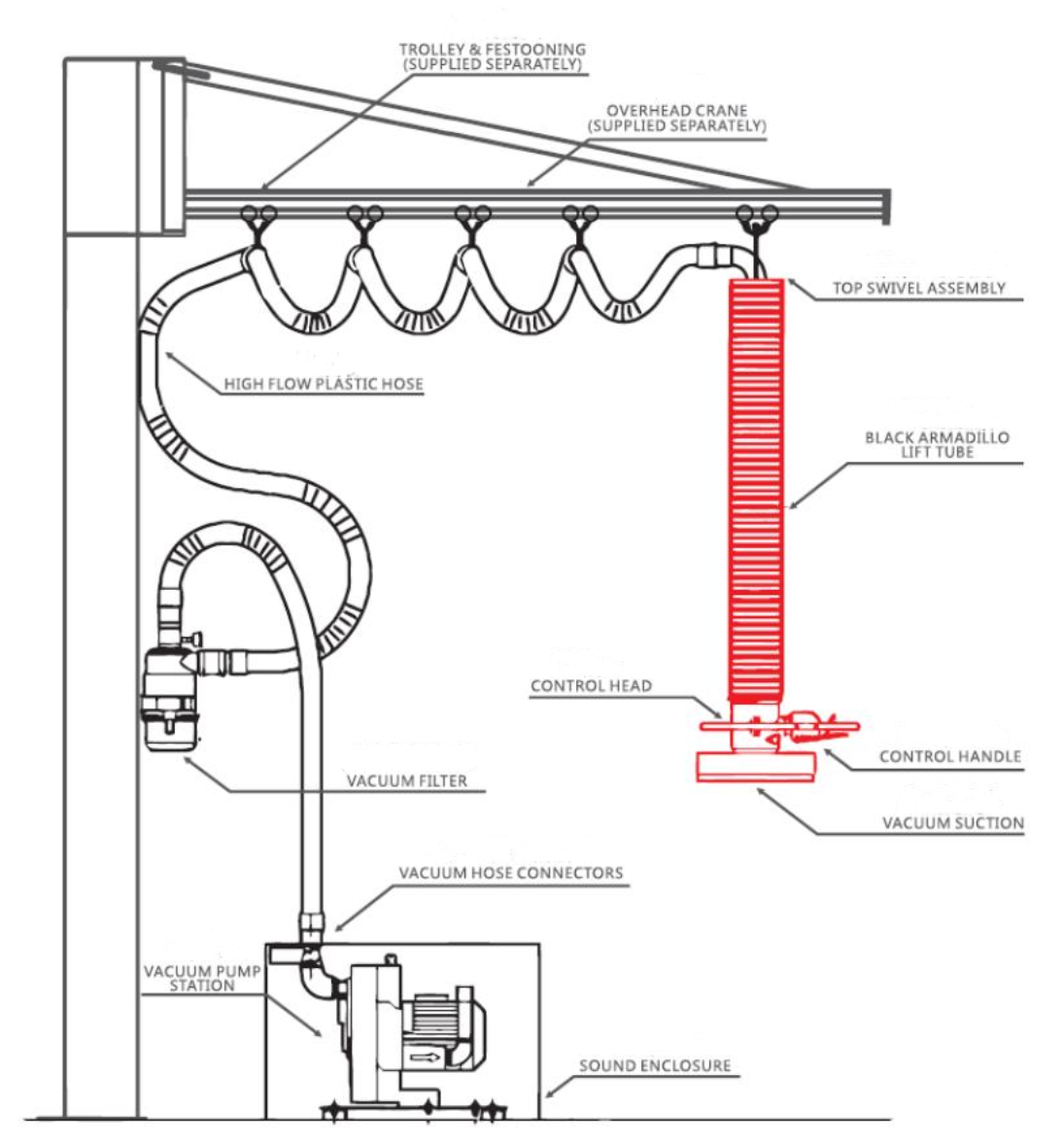
Vacuum Generation and Storage
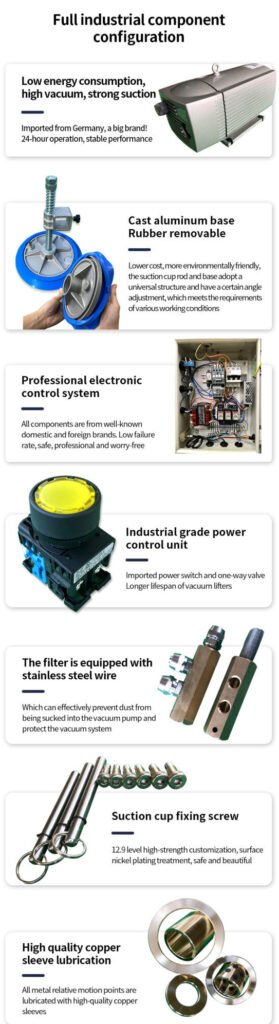
The vacuum source can be an electric pump, a compressed-air-driven ejector, or a blower. Electric pumps are common for fixed stations and high-volume use. Compressed-air ejectors are lighter and simpler, but they require a reliable compressed air supply. Blowers provide high flow at lower vacuum levels, which is useful for porous materials such as MDF or unsealed board.
A vacuum reservoir or storage tank is strongly recommended. It maintains holding force for a short period if the pump stops or a hose is damaged. The reservoir also smooths out pressure fluctuations when several pads are activated at once.
Control, Warning, and Safety Systems
Every lifter should include a vacuum gauge or sensor, non-return valves, and an audible or visual alarm that activates if vacuum drops below a safe threshold. For automated or semi-automated operations, PLC controls can monitor pad pressure and prevent release until the load is fully supported. Manual systems should use a clearly marked release valve with a two-hand or deliberate-action control to prevent accidental release.
Designing for Specific Materials
Glass Vacuum Lifter Design
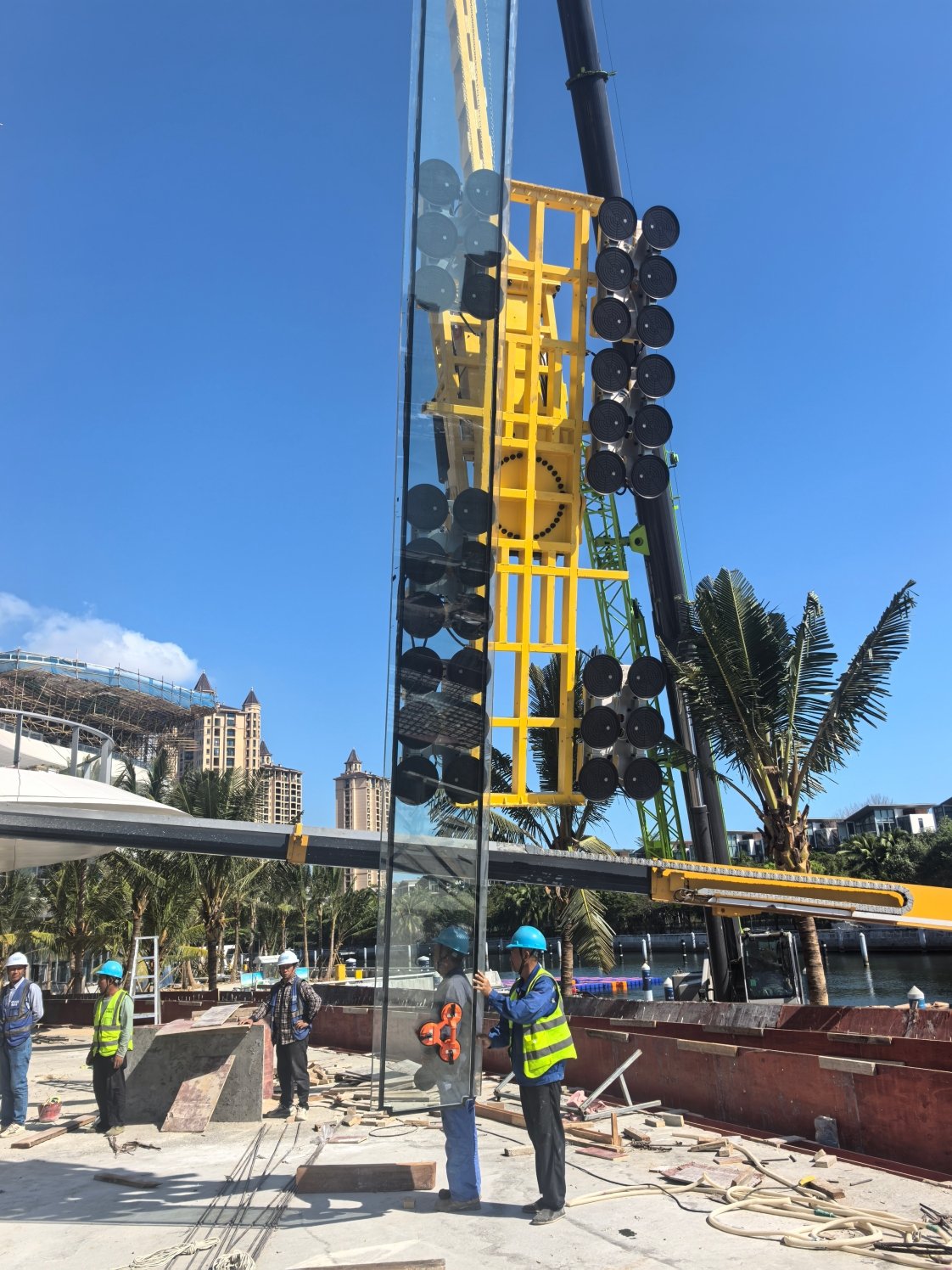
A glass vacuum lifter must be gentle, clean, and precise. Glass surfaces are smooth and non-porous, so they seal easily, but they are also brittle and sensitive to point loads. Use flat silicone pads with a large contact area to spread the force. Avoid hard pad materials that can scratch or leave marks.
For architectural glass, insulating glass units, or large window panels, the frame should distribute vacuum evenly across multiple pads. A central lift point with a balancer helps keep the sheet horizontal or vertical as needed. Because glass can be heavy, calculate the load per pad and keep the vacuum level stable. A backup vacuum reservoir is especially important: a sudden loss of vacuum is unacceptable when lifting glass over people or expensive machinery.
Sheet Metal Vacuum Lifter Design and Supplier Selection
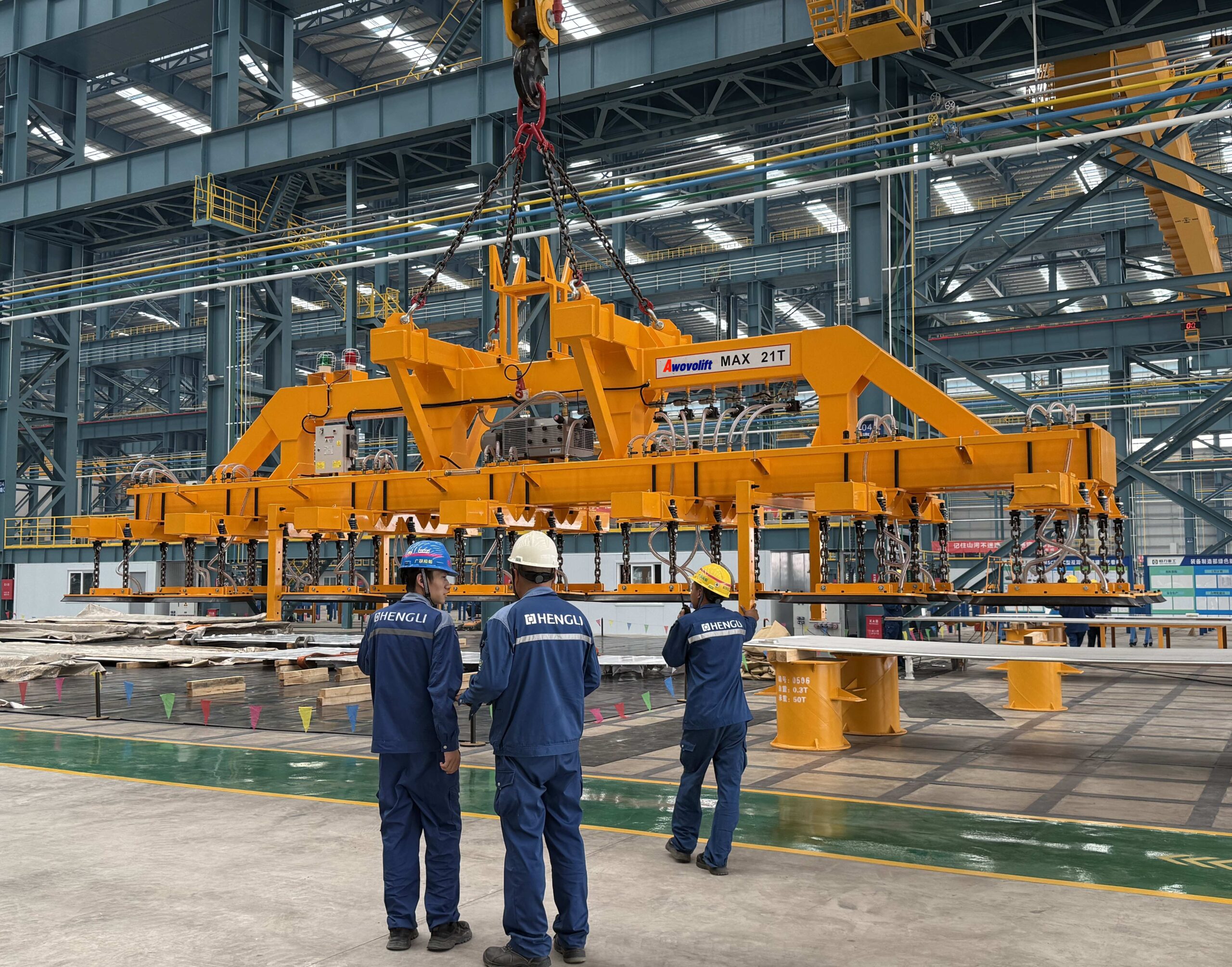
Sheet metal may be smooth, oiled, or coated depending on the mill or factory process. A sheet metal vacuum lifter must handle thin sheets without bending them and thick plates without exceeding the pad capacity. Flat pads in nitrile or polyurethane are standard. For oily sheets, choose an oil-resistant pad material and increase the safety factor because the oil film can reduce friction and effective seal.
When choosing a sheet metal vacuum lifter supplier, look for more than a catalog of parts. A good supplier should:
- Offer modular pad and beam options that fit your load size.
- Provide clear load diagrams and safety calculations.
- Supply compatible vacuum pumps, filters, and control modules.
- Have experience with your specific material grade and surface finish.
- Offer after-sales support, spare seals, and system audits.
This supplier relationship matters because a vacuum lifter is a safety-critical device. A low-cost pad kit without proper engineering support can create a false sense of security.
Roof Panels Vacuum Lifter Design
Roof panels are often long, relatively light in proportion to their length, and may have ribs, corrugations, or textured coatings. A roof panels vacuum lifter needs deep foam pads or bellows pads that can conform to the profile. The frame should be long enough to prevent the panel from sagging at the ends. If the panel flexes, the outer pads may lose seal and the load could shift.
For insulated roof panels or standing seam panels, consider a lifter with multiple independent vacuum circuits. This way, if one pad loses vacuum on a rib or seam, the remaining circuits can hold the panel long enough for the operator to set it down safely. A high-flow vacuum source is often better than a high-vacuum, low-flow pump because textured surfaces leak more air.
Roof panels vacuum lifter solutions should also include padded contact points to prevent damage to painted or coated surfaces, especially on visible roof panels in architectural applications.
Sandwich Plate Lifting Systems
Sandwich plates — including aluminium honeycomb panels, foam-core composite panels, and insulated building panels — present a unique challenge. They are rigid but often have different skin materials on each side. Some skins are smooth, while others are lightly textured. The core may be sensitive to point loads, so the vacuum pads must apply gentle, distributed force.
For sandwich plate lifting, choose a larger number of medium-sized pads instead of a few large pads. This reduces local stress on the skin and prevents delamination. Adjustable pad positions are important because sandwich plates often vary in size. Use a vacuum sensor on each zone so that any loss of seal is detected immediately. If the panel has a porous edge or rough cut surface, avoid placing pads too close to the edge where leakage is higher.

MDF Vacuum Lifter Design
MDF and many wood-based panels are porous. Air moves slowly through the board, so the vacuum pump must be able to maintain adequate flow while the pads are attached. A high-flow blower or a vacuum pump with a large capacity is usually better than a small ejector. The sealing pad should be soft enough to press into the slight surface fibers without damaging the board.
An MDF vacuum lifter should include a vacuum gauge that shows dynamic vacuum, not just static vacuum. If the gauge drops rapidly after the pad is placed, the board is either too porous or the pad seal is poor. In production lines, multiple vacuum zones allow you to cover large MDF sheets while maintaining consistent holding force. Use a filter between the pad and pump to capture fine dust that would otherwise wear the pump.
Modular Configuration Examples
The table below shows how a modular vacuum lifter can be configured for common materials. Use it as a starting point, not a final design. Every application needs its own load calculation.
| Material | Surface Condition | Recommended Pad Type | Vacuum Source | Key Design Note |
|---|---|---|---|---|
| Glass | Smooth, non-porous | Flat silicone | Electric pump with reservoir | Use backup reservoir and mark-free pads |
| Sheet metal | Smooth, oily or coated | Flat nitrile or polyurethane | Air ejector or electric pump | Increase safety factor for oily surface |
| Roof panels | Ribbed, corrugated, textured | Deep foam or bellows | High-flow blower | Multiple independent vacuum zones |
| Sandwich plates | Smooth or lightly textured skins | Medium flat foam pads | Electric pump with zoned control | Distribute load to protect core |
| MDF | Porous, smooth to rough | Soft conforming seal | High-flow pump or blower | Plan for continuous leakage |
Step-by-Step Process for Building Your Perfect Solution
Use this sequence to turn modular components into a working lifter for your specific material and production flow.
- Define the load. Record length, width, thickness, weight, surface finish, porosity, and temperature. Note any protruding edges, holes, or cutouts.
- Determine the lifting orientation. Horizontal, vertical, or rotating? The orientation changes the stress on the pads and frame.
- Calculate the required holding force. Apply the formula and select a safety factor of at least 2:1 for smooth sealed materials and 3:1 or higher for porous or textured surfaces.
- Choose the pad type and size. Match pad material to the surface and position pads so the load is balanced around the center of gravity.
- Size the vacuum source. Consider both vacuum level and flow rate. Porous materials need more flow; heavy smooth materials need stable vacuum.
- Design the frame and lift point. Keep deflection low and ensure the lift point aligns with the load center. Make pad positions adjustable.
- Add safety components. Include check valves, vacuum sensors, alarms, and a reservoir if needed.
- Test with a realistic load. Perform a static hold test and a controlled movement test. Verify that vacuum stays stable when the load is tilted or accelerated.
- Document the system. Record the configuration, load limits, safety factors, and inspection intervals for operators and maintenance teams.
If you need a detailed starting point for your material and lift parameters, download our free vacuum lifter technical scheme with pad selection tables and modular frame layouts.
Common Mistakes to Avoid
- Ignoring dynamic load. A lifter that holds the load statically may fail when the crane accelerates or the operator changes direction. Always include dynamic forces in the calculation.
- Undersizing the vacuum pump. A small ejector may reach the right pressure on a sealed test plate but lose vacuum on a real porous board.
- Using the wrong pad material. Some pads mark glass or degrade quickly in contact with oil. Choose the pad material for the surface, not just the size.
- Placing pads too far apart. Wide pad spacing may let thin sheets bow between pads and lose seal at the edges.
- Skipping a vacuum reservoir. Without stored vacuum, a momentary pump interruption can release the load.
- Not filtering airflow. Dust from MDF or metal fines can damage valves and pumps, reducing holding force over time.
Safety Standards and Compliance
Vacuum lifters fall under below-the-hook lifting device standards in many regions. In Europe, EN 13155 is the primary standard for non-fixed load lifting attachments. In North America, ASME B30.20 covers below-the-hook lifting devices. While these standards do not replace a manufacturer’s specific design rules, they set the baseline for design, testing, inspection, and marking.
For workplace safety, follow the general requirements from <a href=”https://www.osha.gov/” target=”blank” rel=”noopener”>OSHA or the equivalent authority in your country. The <a href=”https://osha.europa.eu/” target=”blank” rel=”noopener”>European Agency for Safety and Health at Work also provides guidance on load handling and equipment use. Always verify that your vacuum lifter is tested and inspected at regular intervals, and train every operator on safe release procedures.
Frequently Asked Questions
What safety factor should I use for a glass vacuum lifter?
For smooth, clean glass, a safety factor of 2:1 is common in many industrial applications. However, if the glass is wet, dusty, or lifted at an angle, a higher factor of 2.5:1 to 3:1 is safer. Always verify with your local standards and supplier.
Can one modular vacuum lifter handle glass and MDF?
Yes, but you may need to change the pads and the vacuum source. Glass needs mark-free flat pads and stable vacuum. MDF needs soft conforming pads and a high-flow pump because air leaks through the board. A modular frame can often be reused for both.
Why does a roof panels vacuum lifter need multiple vacuum zones?
Roof panels often have ribs or corrugations that can break the seal on individual pads. Multiple independent vacuum zones ensure that if one zone loses vacuum, the remaining zones can still hold the load briefly. This gives the operator time to lower the panel safely.
How do I choose a sheet metal vacuum lifter supplier?
Look for a supplier that offers modular components, provides load calculations, has experience with your metal grade and surface finish, and can support you with spare parts and service. A reliable sheet metal vacuum lifter supplier will also help you comply with lifting device standards.
Conclusion
The 236 modular vacuum lifter design is not a single product; it is a disciplined way to combine pads, frames, vacuum sources, and controls into a system that fits the load. By understanding the material surface, applying the correct safety factor, and building from modular components, you can create a lifter for glass, sheet metal, roof panels, sandwich plates, or MDF that is safer, faster, and easier to adapt than a custom one-off.
Start with a clear load profile, match the pad and pump to the surface, and validate the system before it goes into production. To help you specify the right configuration quickly, download our free vacuum lifter technical scheme and use the included selection tables for pads, beams, and vacuum sources.