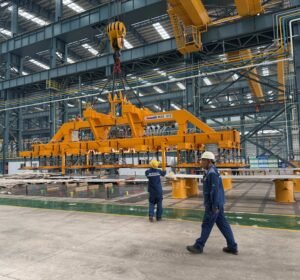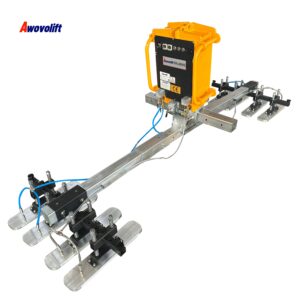
Metal Sheet Fab Shop Efficiency: Vacuum Lifters at Every Station
In the high-stakes world of metal fabrication, efficiency isn’t just a buzzword—it’s the dividing line between profit and loss. Modern fab shops face immense pressure to reduce cycle times, minimize material waste, and, above all, ensure workforce safety. Yet many facilities still rely on outdated material handling methods involving hooks, clamps, chains, and manual labor to move heavy, unwieldy sheets.
The result is a bottleneck. Every time a crane operator waits for a worker to rig a chain, or a forklift dents an expensive sheet of aluminum, the shop loses money. To achieve true lean manufacturing status, automation must begin at the very first point of contact: the stack.
Enter the sheet metal vacuum lifter. By integrating vacuum lifting technology at every station—from receiving and laser cutting to bending and final assembly—fabricators can achieve unprecedented throughput. This article explores how vacuum lifters, specifically designed for carbon steel, stainless steel sheet, and aluminum plate lifting, can transform your shop floor into a streamlined, safe, and highly efficient operation.
The Bottleneck of Traditional Material Handling
Before diving into the solution, it’s essential to understand the problem. Manual handling of large sheets is fraught with difficulties. Operators often struggle with “peeling” sheets off a stack due to the oil films or vacuum seals created between them. Traditional methods often require magnets, which fail spectacularly on stainless steel and aluminum.
Here are the primary inefficiencies plaguing traditional fab shops:
- Safety Incidents: Back injuries, crushed fingers, and foot injuries are common when manhandling heavy gauge metal.
- Surface Damage: Chains and hooks scratch, dent, and mar the surface finish. For stainless steel and aluminum, where aesthetics are critical, this leads to costly rework or scrap.
- Double Handling: Often, one team is required to rig the load, and another performs the actual fabrication. Vacuum lifting allows a single operator to manage the entire process.
- Slow Cycle Times: The time spent rigging and unrigging a load often exceeds the actual processing time on a laser or press brake.
Transitioning to vacuum technology eliminates these inefficiencies by allowing a single operator to attach, lift, and place a sheet in seconds.
(500KG)-scaled.jpg)
How Vacuum Lifting Technology Works
A vacuum lifter operates on a simple principle: creating a negative pressure environment between the lifting pad and the workpiece. A pump (either electric or venturi/compressed air-driven) extracts air from the sealed suction cups or pads.
Atmospheric pressure (approximately 14.7 psi at sea level) then pushes the object against the lifter, creating a secure hold.
Key Components of a Sheet Metal Vacuum Lifter:
- Suction Pads/Seals: Usually made of rubber or polyurethane, designed to grip smooth surfaces.
- Vacuum Pump or Ejector: Generates the vacuum. Electric pumps are standard for battery-powered mobile units; air-powered ejectors are common where compressed air is readily available.
- Vacuum Reservoir/Tank: Holds a reserve of vacuum to prevent immediate release if power fails.
- Warning Systems: Audible and visual alarms that alert the operator if vacuum levels drop below safe thresholds.
- Control Handle: Ergonomic controls for attach/release functions.
While the basic physics are simple, the application in a fab shop is nuanced. Different materials require different handling technologies.
Material-Specific Challenges and Solutions
The key to successful implementation is understanding that carbon steel, aluminum plate lifting, and stainless steel sheet vacuum lifter requirements differ significantly.
The Challenge: Oil on the surface can cause slippage if using standard friction pads. Furthermore, steel sheets are often heavy, requiring high load capacities.
The Solution: Traditionally, magnet lifters were used. However, modern vacuum lifters excel here because they can lift a single sheet without the residual magnetism that causes issues in welding. For carbon steel, vacuum lifters with high-friction rubber seals are necessary to combat the oil film. These systems often feature “sheet separation” valves that puff air between sheets to break the suction seal between oily layers.
Application Example: In a laser cutting station, loading a 6mm thick, 4×8 foot carbon steel sheet manually takes 10 minutes with two men. With a vacuum lifter, one operator can load it in 45 seconds.
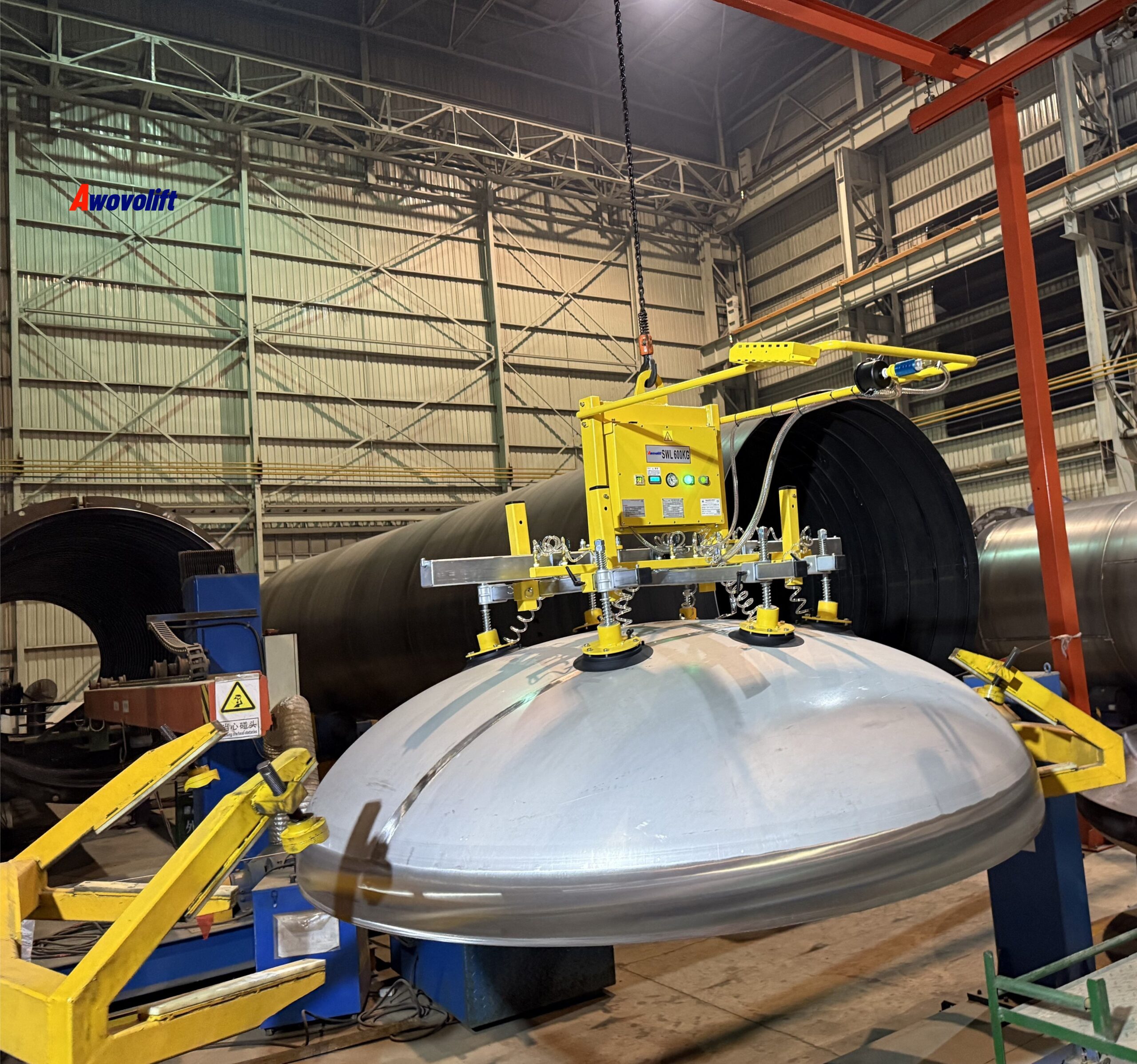
2. Stainless Steel Sheet Vacuum Lifter: Precision and Purity
Stainless steel is prized for its corrosion resistance and aesthetic finish. It is non-magnetic (in the austenitic grades like 304/316), which rules out magnetic lifters entirely.
The Challenge: Surface finish is paramount. Scratches on a stainless steel sheet are unacceptable. The material is also often polished to a mirror finish, which makes adhesion either very easy (smooth) or difficult (if textured). Additionally, contamination from carbon steel dust must be avoided to prevent rust spots.
The Solution: Vacuum lifting is the gold standard for stainless steel. The soft rubber pads will not scratch or contaminate the surface. For polished sheets, seal materials that leave no marks (like silicone or specific nitrile compounds) are required. Furthermore, because stainless steel is often thinner (gauge material) but wide, a spreader beam with multiple suction cups distributes the weight, preventing sagging and deformation during the lift.
Application Example: Moving a brushed #4 finish sheet to a press brake. A vacuum lifter with 360-degree rotation allows the operator to flip the sheet to the correct orientation without dragging it across the table, preserving the finish.
3. Aluminum Plate Lifting: The Lightweight Paradox
Aluminum is lightweight but often comes in large plates that are awkward to handle. It is non-magnetic and, critically, susceptible to indentation and bending.
The Challenge: Aluminum is porous in some cast forms, but rolled plate is usually smooth enough for vacuum. The main issue is weight distribution. A thin aluminum plate can “sag” at the edges if not supported by enough lifting points.
The Solution: For aluminum plate lifting, vacuum lifters with multiple pads configured along a rigid beam are ideal. This distributes the weight evenly. Because aluminum is non-ferrous, vacuum is the primary safe method for single-operator lifting. Additionally, vacuum lifters prevent the “oil canning” effect (permanent dents) that occurs when using hooks or chains.
Application Example: Loading a 5×10 sheet of 1/8 inch aluminum onto a CNC router. The vacuum lifter’s large surface area pads prevent the sheet from bowing, allowing for accurate placement on the spoil board.
Integrating Vacuum Lifters at Every Station
To maximize ROI, a fab shop should not limit vacuum lifters to just the loading dock. They should be integrated into the workflow “cells.”
Station 1: Raw Material Storage & Receiving
Loading and unloading trucks is where damage often begins. A forklift with a vacuum attachment allows a driver to unload a flatbed without a spotter and without slings.
Efficiency Gain: Reduces product damage at receiving by 90%. Allows for high-density storage because materials can be placed flush against each other (no need for dunnage wood for fork access).
Station 2: Laser and Plasma Cutting
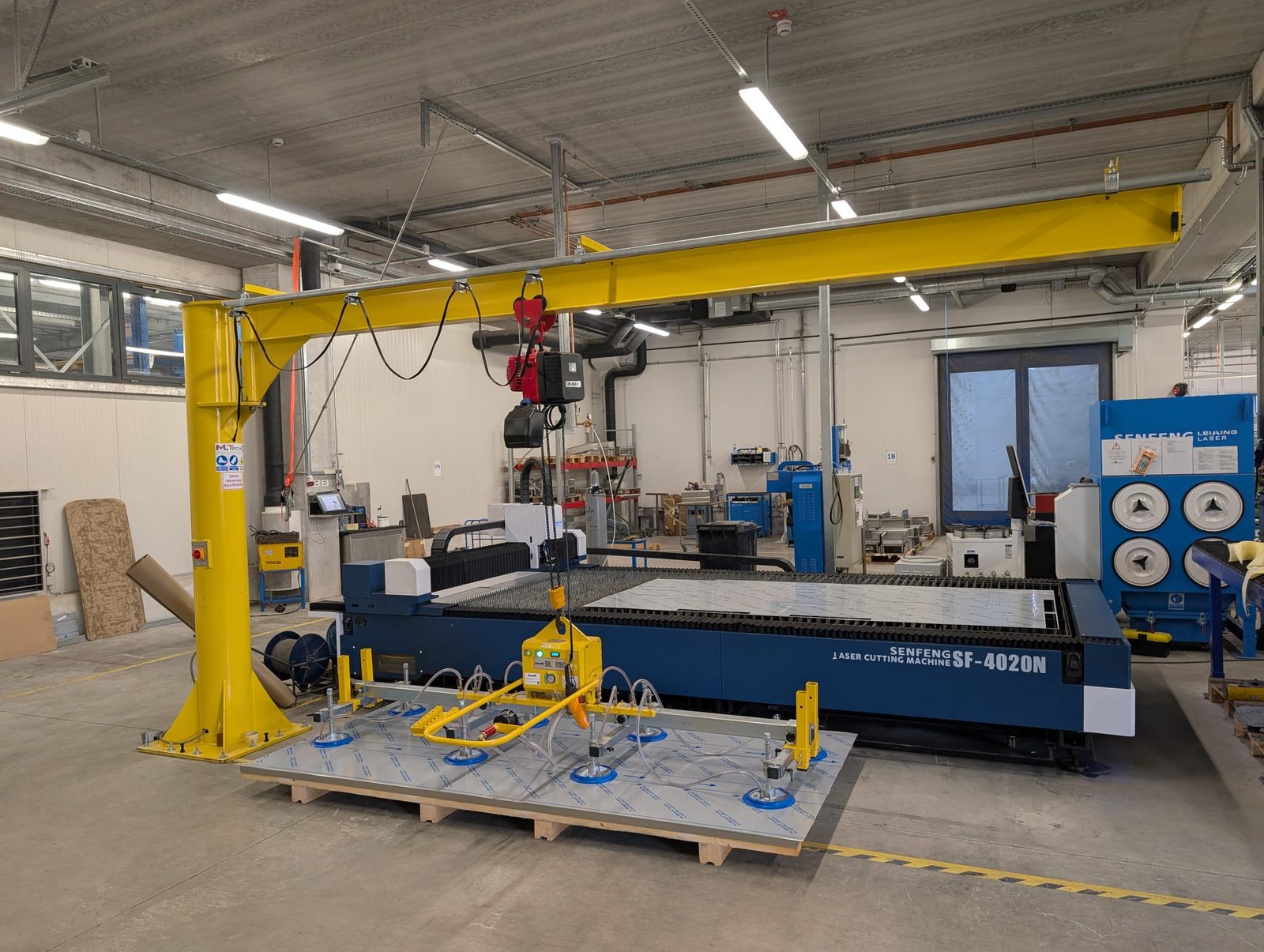
This is the most common entry point for vacuum adoption. Loading a heavy plate onto a cutting bed requires precision to avoid striking the gantry or slats.
- Sheet Metal Vacuum Lifter Role: The lifter can be mounted on a jib crane over the laser table. The operator swings the plate over, lowers it, and releases.
- Key Feature: “Soft release” is crucial here. The vacuum should bleed slowly to allow the sheet to settle gently onto the slats without bouncing.
Efficiency Gain: Reduces laser idle time. If a laser is cutting air, it is losing money. Faster loading increases the “beam on” time.
Station 3: Deburring and Grinding
After cutting, parts need deburring. Often, the entire skeleton (the leftover sheet) needs to be removed.
Efficiency Gain: Vacuum lifters can lift the skeleton out of the table easily, even if it has been cut into multiple pieces (as long as the pads are placed on intact areas). For smaller parts, specialized “porous” or “area” grippers can lift many pieces at once.
Station 4: Press Brake Bending
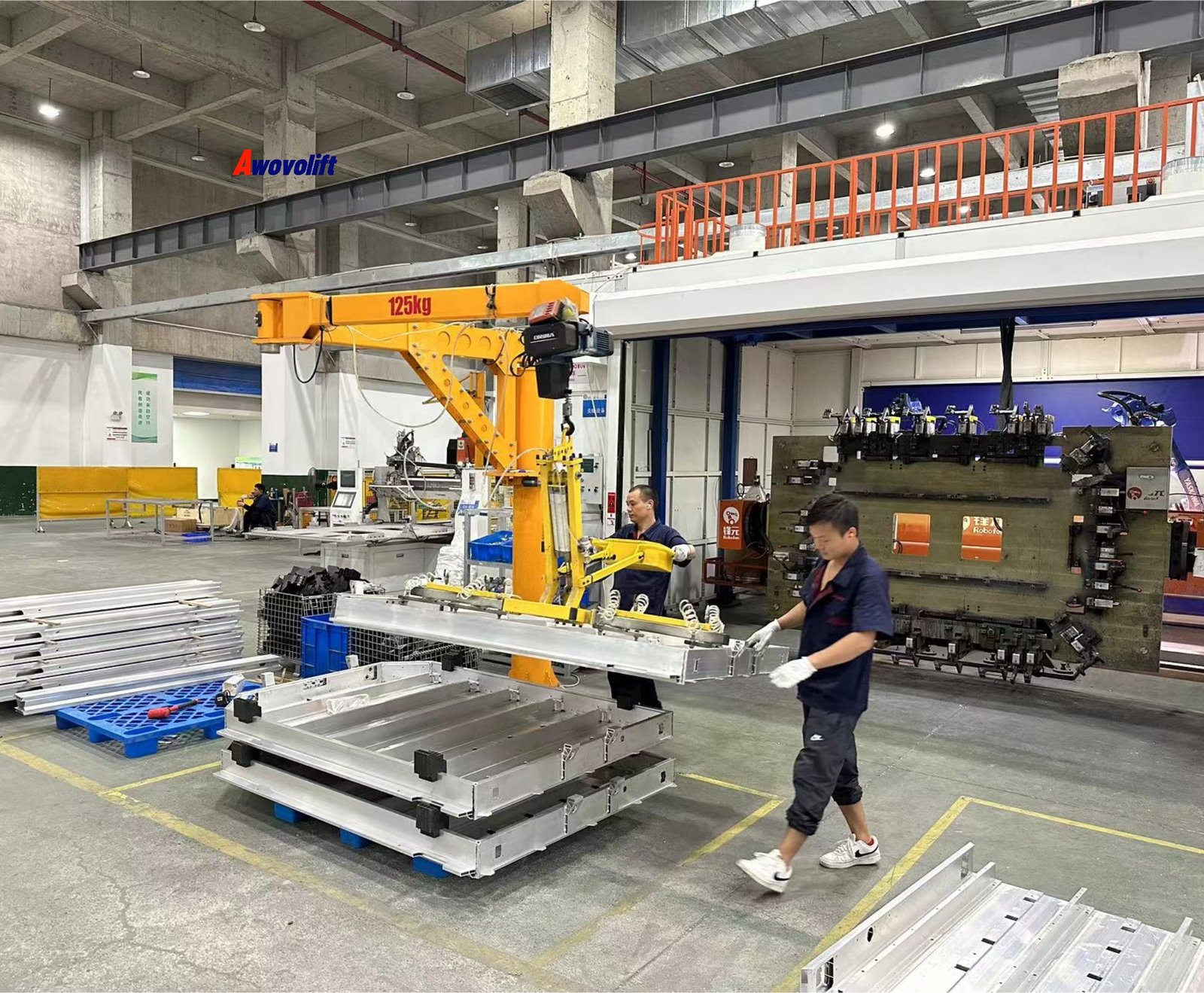
This is arguably the most physically demanding station. Operators handle large blanks, holding them up against the back gauge while the brake forms the metal. This is a major cause of back injuries and produces inconsistent bends due to operator fatigue.
The Solution: A “Press Brake Assistant” vacuum lifter. These are balanced manipulators that hold the weight of the part. The operator guides the part into the die with one hand while the vacuum lifter carries the load. It supports the part as it moves up with the bend.
Efficiency Gain: Studies show that using a vacuum lift assist on a press brake increases productivity by 30–40%. It also allows a single operator to handle parts that previously required two people. The quality improves because the operator is focusing on precision, not strength.
Station 5: Welding and Assembly
Fit-up is critical for welding. Holding a heavy plate in position while tack welding is difficult.
The Solution: A vacuum lifter with a 90-degree tilt function can hold a plate vertically while it is tacked to a frame. Some systems allow for 360-degree rotation, enabling the welder to position the workpiece perfectly without using an overhead crane and chains.
Efficiency Gain: Reduces rigging time and improves safety in the weld cell. It eliminates the need for “come-alongs” and pry bars to align heavy components.
ROI: The Mathematics of Vacuum Lifting
Investing in a sheet metal vacuum lifter is a capital expenditure that often pays for itself within 6 to 12 months. Here is how the return on investment materializes:
1. Labor Reduction
If a lifting operation currently requires a crane operator and a rigger (2 people), and a vacuum lifter allows the crane operator to do it alone, you have cut labor costs by 50% for that task. Over a year, this is a significant sum.
2. Damage Reduction
The cost of scrapping a single 4×8 sheet of 304 stainless steel due to a dropped chain can be thousands of dollars. Vacuum lifters provide a secure grip that eliminates such accidents.
3. Equipment Wear
Forklifts used with chains and slings often sustain damage to masts and forks. Vacuum attachments are gentler on the equipment and the floor.
Key Takeaway: The most expensive machine in a fab shop is the one that is not running. Vacuum lifters optimize the “machine utilization rate” by minimizing the downtime between jobs.
Safety Standards and Best Practices
While vacuum lifters are inherently safer than chains, they are still lifting equipment and must be treated with respect.
- The 2:1 Safety Factor: Always ensure the lifter is rated for at least twice the weight of the load you are lifting.
- Surface Condition: Vacuum lifters require a relatively clean, non-porous surface. Excessive rust scale or deep textures will break the seal. Ensure your metal is within the specified roughness (Ra) range for your specific lifter.
- Power Loss Protection: Ensure the unit has a vacuum reservoir (tank) large enough to hold the load for several minutes if the pump fails, allowing the operator to lower the load safely.
- Daily Inspections: Check pads for cuts, cracks, or oil saturation. Replace worn pads immediately. A $50 pad is cheaper than a lawsuit.
Choosing the Right Vacuum Lifter for Your Shop
When specifying a sheet metal vacuum lifter, consider the following checklist:
- Material Type: Are you lifting carbon steel, stainless, or aluminum? (Or all three?)
- Surface Finish: Is it hot rolled (rough) or cold rolled (smooth)? Polished?
- Sheet Dimensions: Length and width determine the size of the spreader beam needed.
- Weight: The maximum thickness and density of the material you handle.
- Orientation: Do you need to rotate 90 degrees or 180 degrees? Do you need to turn it from horizontal to vertical?
- Power Source: Electric (for mobile battery units) or pneumatic (for fixed stations with air supply)?
- Environment: Is it clean, or is there dust/oil? This affects the pump choice.
Comparing Lifting Technologies
| Feature | Vacuum Lifter | Magnet Lifter | Chains/Hooks |
| Carbon Steel | Excellent | Excellent | Poor (Damage) |
| Stainless Steel | Excellent | Not Possible | Poor (Damage) |
| Aluminum | Excellent | Not Possible | Poor (Damage) |
| Surface Damage | None | Minor (Scratches) | Severe (Dents/Scratches) |
| Single Operator Use | Yes | Yes | Rarely |
| Energy Consumption | Air/Electric (Low) | None needed | None needed |
This table clearly illustrates why vacuum technology is the only comprehensive solution for a mixed-material fabrication shop. If your shop processes both ferrous and non-ferrous metals, a stainless steel sheet vacuum lifter or an aluminum plate lifting system is your only viable automated option.
Integrating Vacuum Lifting with Industry 4.0
The future of fabrication is smart manufacturing. Vacuum lifters are no longer just dumb “suction cups.” Modern systems are equipped with sensors that monitor pressure in real-time, and they can be tied into the shop’s ERP system.
Imagine a scenario where the laser cutting software signals the overhead crane system. The crane automatically selects the correct vacuum lifter attachment for the next job. It moves to the inventory rack, picks up the specific type of carbon steel required, and brings it to the laser. This is “lights out” material handling.
While this level of automation is high-end, even standard vacuum lifters improve the data baseline. By knowing how long it takes to move a part, managers can better schedule the shop floor.
Conclusion: Elevate Your Operation
In the competitive landscape of metal fabrication, efficiency is survival. Manual handling is slow, dangerous, and damaging to your valuable inventory. By implementing vacuum lifter technology at every stage—from the receiving dock to the press brake—you unlock a new level of operational fluidity.
The versatility to handle carbon steel without magnets, stainless steel without scratches, and aluminum without bending is no longer a luxury; it is a necessity for a modern fab shop. The integration of a sheet metal vacuum lifter system eliminates the “human forklift” syndrome, allowing skilled technicians to spend their time on value-added tasks like cutting, bending, and welding, rather than fighting with chain slings.
The investment in vacuum lifting is an investment in your workforce’s safety, your product’s quality, and your bottom line.
Ready to Optimize Your Material Flow?
Every fabrication shop has a unique layout, crane system, and material mix. Installing a one-size-fits-all solution rarely captures the full ROI potential. To ensure you select the right lifter capacity, pad configuration, and beam length for your specific workflow, you need technical data from Awovolift.com.
Don’t guess—engineer your solution.
We have developed a comprehensive technical scheme that outlines the specifications for various materials, including load charts for carbon steel, aluminum plate lifting parameters, and stainless steel sheet vacuum lifter configurations.
Download our free vacuum lifter technical scheme today and discover how to engineer your shop for maximum throughput and safety. Get the exact specifications you need to make an informed decision and elevate your fabrication process.